FPT UAV CEO Reveals the Potential of the Low-Altitude Economy
•
30/04/2026
“Based on current projections, we believe the low-altitude economy could reach around USD 10 billion within the next 15 years, with approximately one million highly skilled workers in this field,” said Mr. Vu Anh Tu, CEO of FPT UAV, FPT Corporation.
Unmanned Aerial Vehicles (UAVs) have been identified as one of the strategic technologies under the Prime Minister’s Decision 1131, contributing to the development of the low-altitude economy. According to experts, Vietnam’s low-altitude economy could reach a potential value of approximately USD 10 billion over the next 15 years, with the country well-positioned to become a regional and global hub for low-altitude industries.
To achieve this, what should Vietnam prepare in terms of legal frameworks, human resources, and technology? VOV Traffic recently interviewed Vu Anh Tu, CEO of FPT UAV, FPT Corporation, on this topic.
– In your opinion, which sectors will drive the low-altitude economy in Vietnam?
Mr. Vu Anh Tu:
The low-altitude economy is being applied across a wide range of sectors, including logistics, agriculture, surveying, and mapping. It is gradually becoming an important strategic direction.
Based on our projections, the low-altitude economy could reach a scale of around USD 10 billion within 15 years, with about one million highly skilled workers participating in the sector.
We are particularly encouraged that the Hanoi Capital Master Plan has identified low-altitude space as a new domain for economic development—similar to underground and surface spaces.
For the first time, low-altitude space has been incorporated into official planning and recognized as a new layer of economic infrastructure—an entirely new and forward-looking approach.

Mr. Vu Anh Tu, CEO of FPT UAV, FPT Corporation. (Photo: Tran Huan)
– As you mentioned, agriculture is already seeing effective applications. What about other areas such as aerial tourism or search and rescue?
Currently, drones are performing very effectively in agriculture and are becoming a new mode of labor.
In addition, logistics presents significant opportunities—especially in Vietnam’s mountainous and midland regions, where transportation is less convenient but agricultural production is extensive. These areas are highly suitable for UAV-based logistics applications.
Recently, we collaborated with the Ministry of Science and Technology and Dien Bien Province to pilot the transportation of essential goods, medical supplies, biological materials, and high-value agricultural products using UAVs. This helps assess the feasibility of drone-based logistics and represents a major opportunity.
Tourism is another promising area. Vietnam has many stunning destinations, such as Ha Long Bay, where air taxi services could be introduced to enhance tourism appeal.
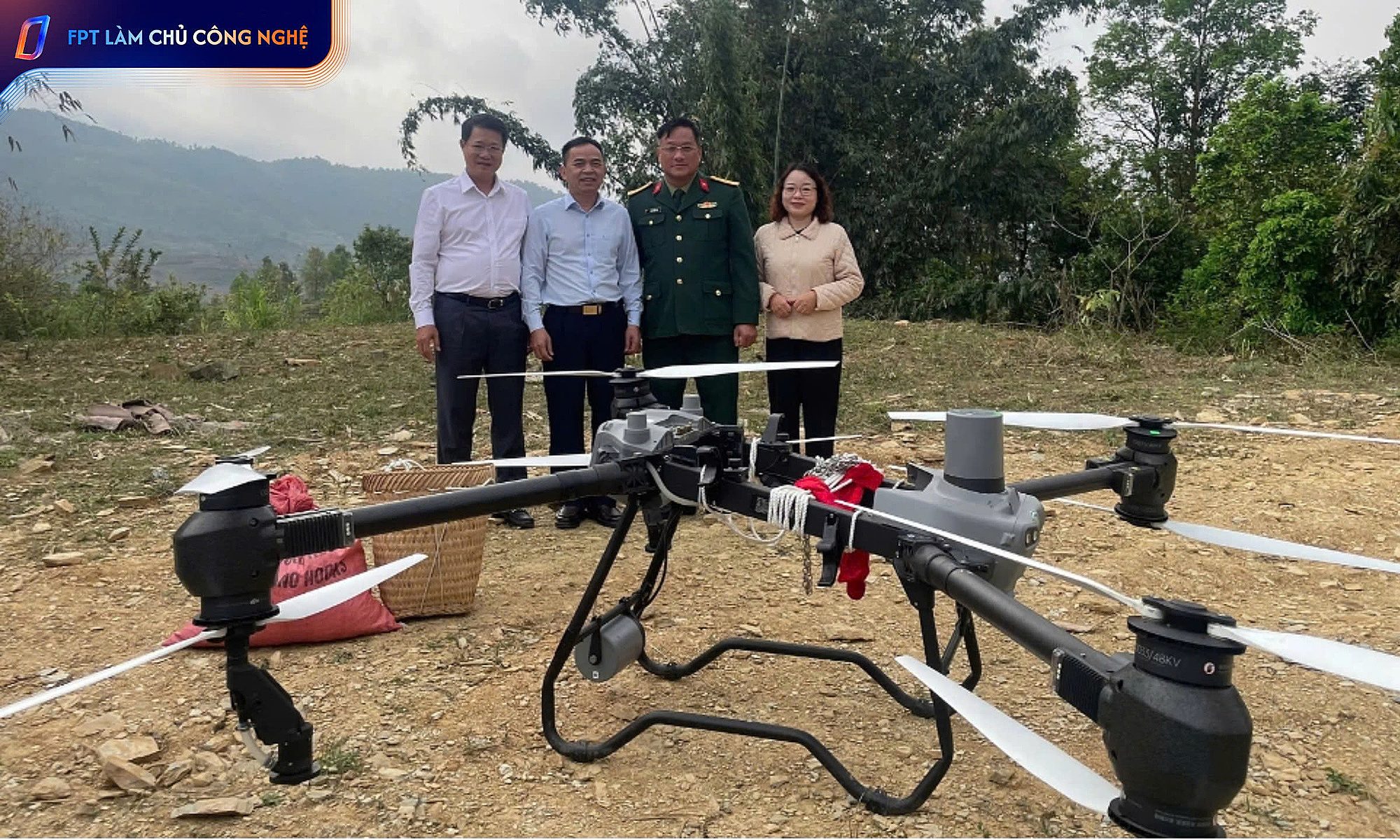
UAVs tested for transporting agricultural products in Dien Bien Province under a joint project between the Ministry of Science and Technology and FPT. (Photo: MST)
– With such potential, what legal framework is needed to enable effective development of the low-altitude economy?
In 2025, Vietnam issued Decree 288, followed by a series of guiding circulars. This represents the first legal framework to formalize all activities related to UAVs—from manufacturing and import to pilot training. It is a critically important foundation.
We believe that, given the Government’s rapid pace of action, the low-altitude economy will soon have a more comprehensive legal system—one that ensures strict governance while enabling broader technological innovation, particularly within high-tech zones.
For example, sandbox mechanisms (controlled testing environments) could allow UAV operations in designated areas such as high-tech parks to support research and development activities.
We are studying international high-tech park models and aim to introduce similar ecosystems in major cities such as Hanoi and Ho Chi Minh City to develop low-altitude economic zones. More importantly, this will foster a broader ecosystem of companies connected to training institutions, enabling students to continue developing projects and potentially become future unicorns.
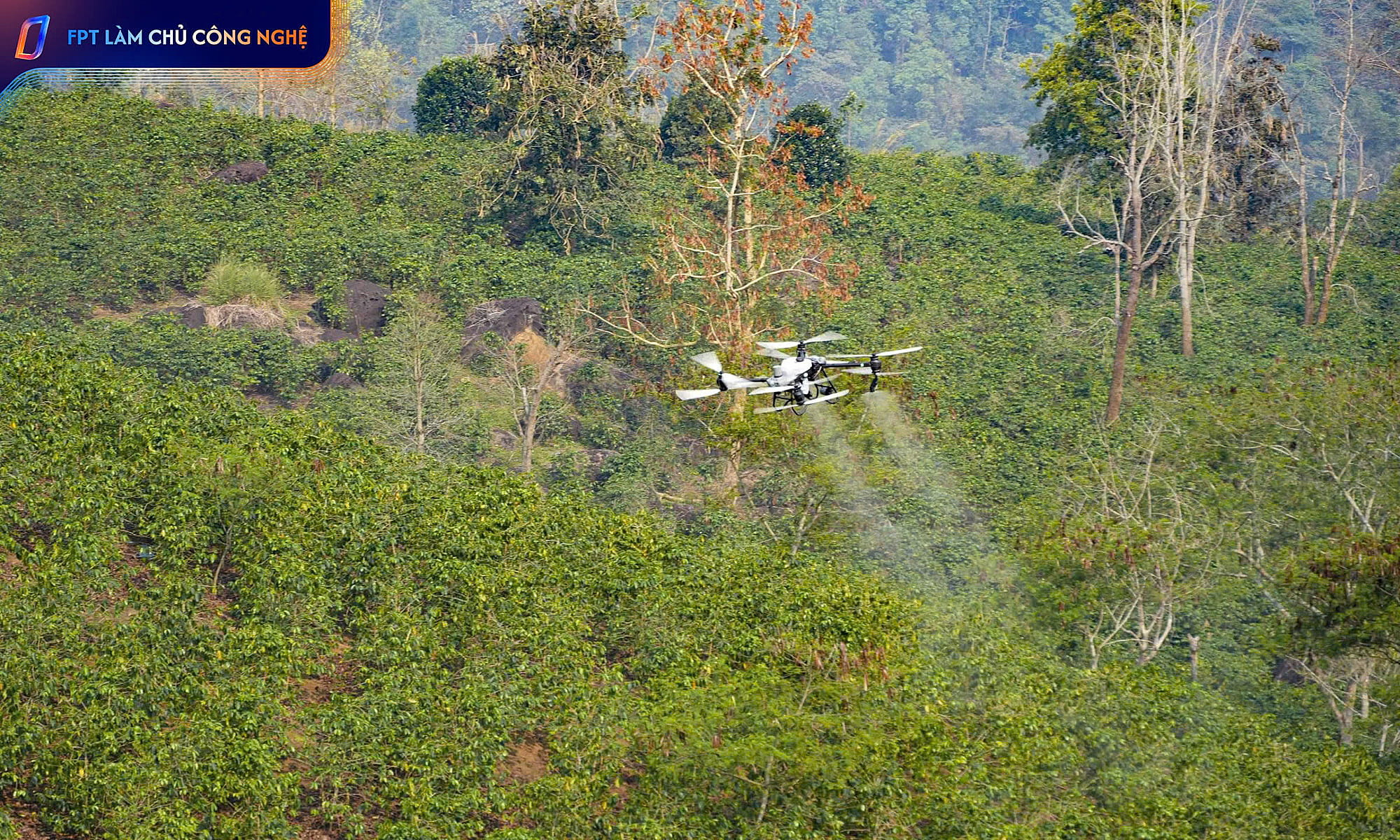
UAVs developed by FPT and Truong Thinh Drone testing pesticide spraying for coffee crops in Dien Bien Province. (Photo: Xuan Tu/VNA)
– Looking ahead, what preparations are needed in terms of infrastructure, technology, and human resources?
Infrastructure planning is critical for the low-altitude economy. This includes:
Ground infrastructure: landing pads and logistics hubs for UAVs and air taxis
Airspace planning: designated flight corridors to ensure safe operations, avoiding restricted areas such as government buildings, financial institutions, and banks
Telecommunications infrastructure: robust connectivity to support UAV operations, requiring significant investment from telecom providers
Regarding human resources, Vietnam has strong training capabilities in aviation, but the scale remains limited. We are collaborating with universities such as Hanoi University of Science and Technology to build a workforce for this sector.
At the same time, FPT University is working with international partners from India, Japan, and South Korea to bring advanced training programs to Vietnam and integrate them into local curricula.
FPT has also established the QUACI Institute (AI and Quantum Research Institute), offering doctoral-level training in areas including UAV technologies. These initiatives are part of our proactive efforts to prepare human resources for this field.
With a commitment to mastering strategic technologies, FPT has announced investments in UAV research and development and established FPT UAV. This underscores the Group’s commitment to supporting national priorities under Resolution 57, leveraging science and technology to drive socio-economic development.