
Birds Returning to the Nest – The Story of FPT People Bringing Vietnamese Talent Home to Build the Semiconductor Industry
•
16/03/2026
On the global semiconductor map, many Vietnamese engineers and scientists are working quietly behind the scenes. Like birds flying far across the skies of global technology, they still carry within them the aspiration to return and help build a new industry for their homeland.


In the evenings in Silicon Valley, Randy Tran sits in front of his computer screen at the office of Applied Materials, a corporation providing equipment, services, and software for chip manufacturing. Alongside other engineers, he works tirelessly to optimize chip designs for advanced 3-nanometer technology, aiming toward 2 nanometers. The design room is not short of Vietnamese faces. They are part of the complex process of creating semiconductor chips. Randy Tran often wondered: why is it that among those chips, there are so few bearing a Vietnamese brand?
Years later, in Da Nang—where central Vietnam’s sunlight and sea breeze sweep through the labs of FPT Semiconductor—this engineer, with more than two decades of experience in chip design in the U.S., now stands before a classroom teaching Physical Design, a critical stage in the chip design process. Randy returned not only to be closer to his mother but also to pass on the knowledge he accumulated from the world’s semiconductor hubs. He now dedicates most of his time to training young engineers at FPT, leading two three-month courses in Da Nang and Ho Chi Minh City.
Each class lasts for hours, as he patiently guides students step by step: from reading chip designs and identifying system errors to understanding the stories behind each chip. For Randy, teaching is a way to share the kind of experience that cannot be found in textbooks—knowledge built over more than 20 years in the industry. He fosters an open classroom environment where students feel free to ask questions and learn through trial and error, much like young engineers in major tech centers.
Randy Tran previously worked at major corporations such as NEC Electronics, Synopsys, and Applied Materials (in both the U.S. and Japan). His story reflects a broader reality: Vietnamese talent has proven its intellectual capability in the global semiconductor value chain for decades.
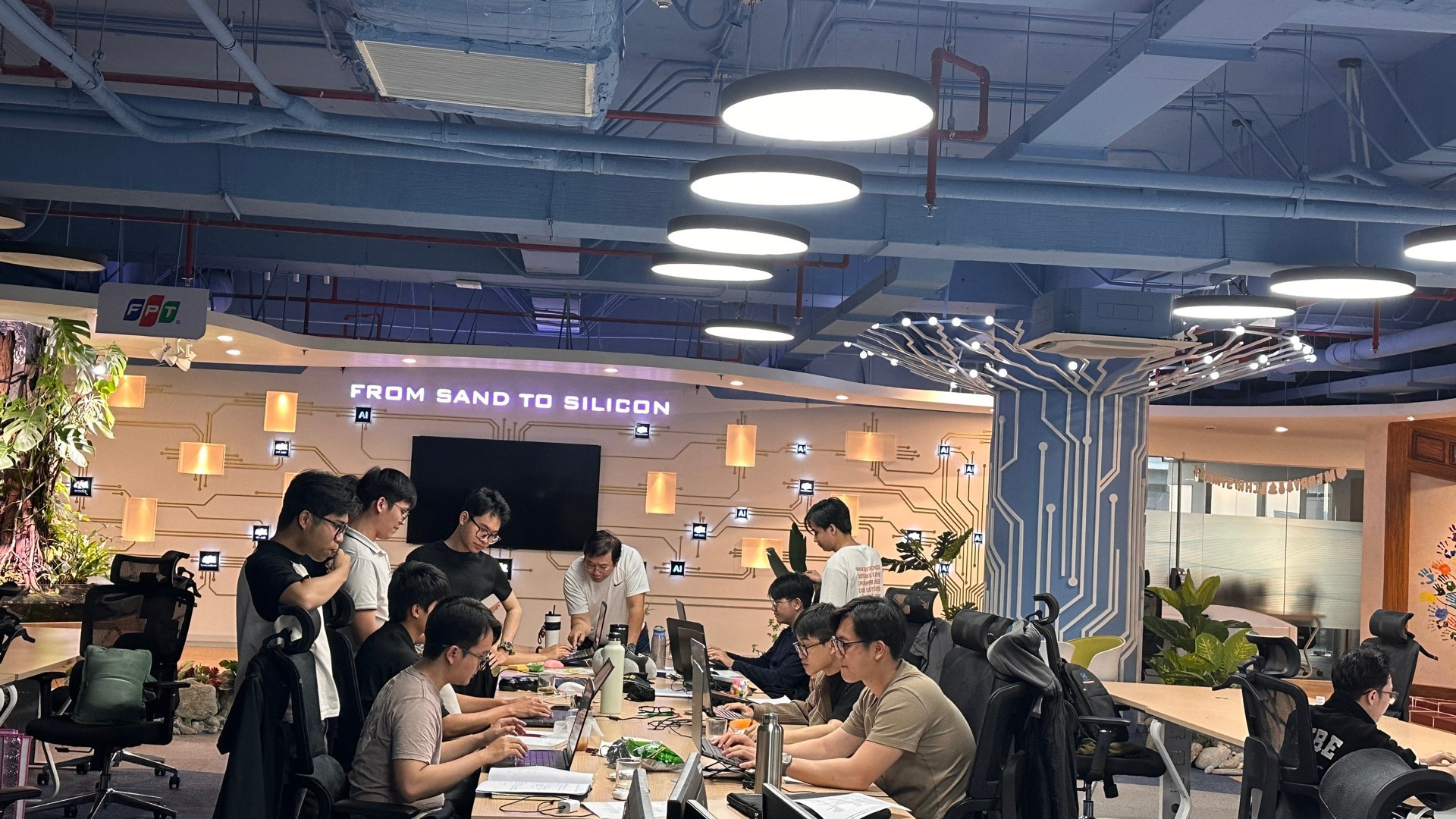
Engineer Randy Tran patiently guides students step by step, from reading chip designs and identifying system errors to understanding how chips are created.
Vietnam currently has around 7,000 engineers working in chip design, along with thousands more involved in packaging, testing, and semiconductor equipment. The total workforce is estimated at about 15,000—still modest compared to the rapidly growing demand of the industry. However, these figures do not fully capture another reality: many Vietnamese engineers are working in semiconductor hubs across the U.S., Japan, and Taiwan (China), just as Randy Tran once did.
According to Randy, Vietnamese engineers are highly regarded for their ability to learn quickly and their strong work ethic. They are intelligent, hardworking, and capable problem-solvers. What they lack is access to real-world projects and a strong technical environment.
As the global semiconductor industry faces a shortage of highly skilled talent, this presents an opportunity for Vietnam to move deeper into the value chain. The country can begin with areas aligned to its capabilities, such as design, testing, advanced packaging, and technical services supporting design.
“Not many countries still have a young generation willing to enter such a demanding field. Semiconductor work requires patience, discipline, and a solid technical foundation. With serious investment from the government and educational institutions, and a generation of diligent, ambitious students who love mathematics, Vietnam can absolutely build a strong engineering workforce in design and technical domains,” he noted.
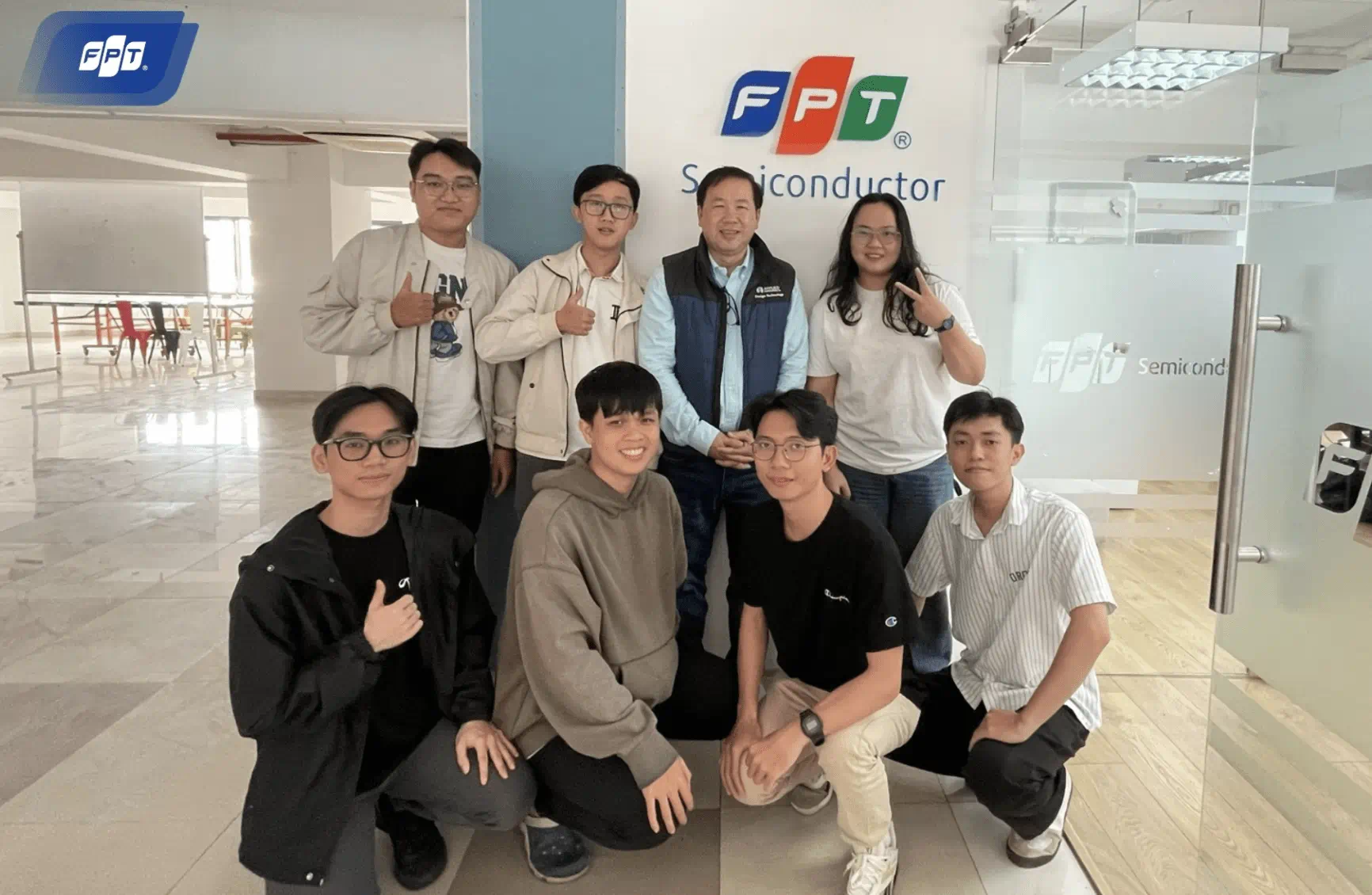
Vietnamese talent holds key advantages: youth, strong technical foundations, and a fast learning ability.
In recent years, alongside the gradual formation of a domestic semiconductor ecosystem, stories like Randy Tran’s have pointed to a new trend: after years of working and gaining experience abroad, Vietnamese experts are beginning to return home to contribute to training and workforce development.
Notable examples include Nguyen Bich Yen, a world-leading semiconductor expert with more than 40 years of experience and Chair of VSAP Lab; Professor Phan Manh Huong from the University of South Florida (USA), who collaborates with Vietnam’s Ministry of Science and Technology and the Vietnam Academy of Science and Technology; and Associate Professor Nguyen Ngoc Mai Khanh, who returned after 15 years of research at the University of Tokyo.
Beyond chip design labs and classrooms like Randy Tran’s, Vietnam’s semiconductor workforce story is also being nurtured by experts who studied and conducted research abroad. They are working to bring international-quality education and research environments back to Vietnam.
In Daegu, a major industrial and technological hub in South Korea, Dr. Le Anh Ngoc once studied and conducted research at Kyungpook National University. On its expansive campus, lecture halls, libraries, and laboratories operate around the clock. Faculty members, researchers, and students collaborate on scientific projects, developing ideas that serve both academia and industry.
During his years as a doctoral researcher, Dr. Ngoc immersed himself in study, research, and academic exchange with international scientists. His work spanned topics from network systems and artificial intelligence to foundational semiconductor technologies.
Inspired by this professional academic environment, he began to consider the possibility of building similar international-standard programs and research ecosystems in Vietnam. He believed that if Vietnamese students had access to high-quality education and early research opportunities, they could excel in core technology fields.
“Even when I was in South Korea, I always thought that one day I would return to teach and build such research groups in Vietnam. Vietnamese students are very intelligent and eager to learn. The key is to create an environment where they can realize their potential,” he shared.
Upon returning, Dr. Ngoc became actively involved in education and research within FPT’s ecosystem. He helped develop a partnership program between FPT and Gachon University, implementing a 2+2 international bachelor’s program in semiconductor technology—two years in Vietnam followed by two years in South Korea, including hands-on training in advanced laboratories.
He emphasized that Vietnam’s opportunity in semiconductors lies not only in attracting technology companies but also in building a strong education and research system to prepare the future workforce.
Alongside those “birds returning home,” many Vietnamese experts working abroad continue to follow the industry’s development in Vietnam. Through conferences, forums, and professional networks, they share knowledge, contribute policy insights, and support domestic technology companies in accessing new trends.
One such expert is Duong Minh Tien, currently an R&D semiconductor engineer in South Korea. He is also a member of the Vietnam Innovation Network in Korea (VINK), a community of Vietnamese professionals working in high-tech sectors. Despite living abroad, he actively participates in forums, shares experience with students and engineers, and contributes to policy discussions.
Motivated by the example of previous generations, Tien feels a responsibility to contribute. He is particularly inspired by veteran experts like Dr. Nguyen Bich Yen, who, even in their seventies and eighties, continue to dedicate themselves to advising and supporting Vietnam’s semiconductor development.
“Vietnam does not lack talent, and many people genuinely want to contribute to the country, even in small ways. To build a strong semiconductor ecosystem, Vietnam needs to foster a technology startup culture where overseas Vietnamese expertise, domestic technical talent, and corporate investment come together to create new semiconductor enterprises,” he said.
After years working in global semiconductor hubs, engineers like Randy Tran, Dr. Le Anh Ngoc, and Duong Minh Tien have become “birds returning to Vietnam’s skies.” They are building laboratories, classrooms, and knowledge-sharing communities, hoping to nurture the next generation of talent—young “birds” who will one day fly to global technology frontiers such as Taiwan (China), Japan, and the United States.
Vietnamese engineers will carry with them knowledge and ambition, contributing to the creation of semiconductor chips—tiny components often described as the “oil” of the 21st century.

Highlight news
FPT News | 03/07/2025