FPT Chairman Truong Gia Binh: “No One Can Maintain Competitiveness Without AI”
•
28/05/2026
Hanoi, May 27 – At the event “AI: Shaping Human-Centered Innovation,” leading experts in artificial intelligence, education, healthcare, and international investment discussed how AI is reshaping the way people learn, work, and innovate. Speakers emphasized that AI is not a technology organizations can simply purchase and expect immediate results from. Instead, Vietnam’s opportunity lies in training people capable of transforming businesses, education, and healthcare through a human-centered approach, rather than merely chasing the race for larger AI models.
The event was co-organized by FPT Corporation, the New Turing Institute (NTI) – an organization building AI ecosystems in the region – and Pacific Gateway Partners (PGP), a strategic bridge between the United States and Asia. The program also formed part of the Au Lac Grand Prize, an initiative aimed at connecting the AI community, promoting technology learning, and encouraging young Vietnamese talent to tackle real-world challenges using AI.
The event gathered globally recognized speakers, including Dr. Ed H. Chi, Vice President of Research at Google DeepMind; Dr. Luong Minh Thang, Principal Scientist and Research Director at Google DeepMind, Co-founder of the New Turing Institute (NTI), and member of the Au Lac Grand Prize Final Jury Council; Professor Po-Shen Loh, Mathematics Professor at Carnegie Mellon University; Ms. Jean Desombre, Founder and Partner at Pacific Gateway Partners; and Professor Preslav Nakov, Department Chair and Professor of Natural Language Processing at Mohamed bin Zayed University of Artificial Intelligence (MBZUAI).
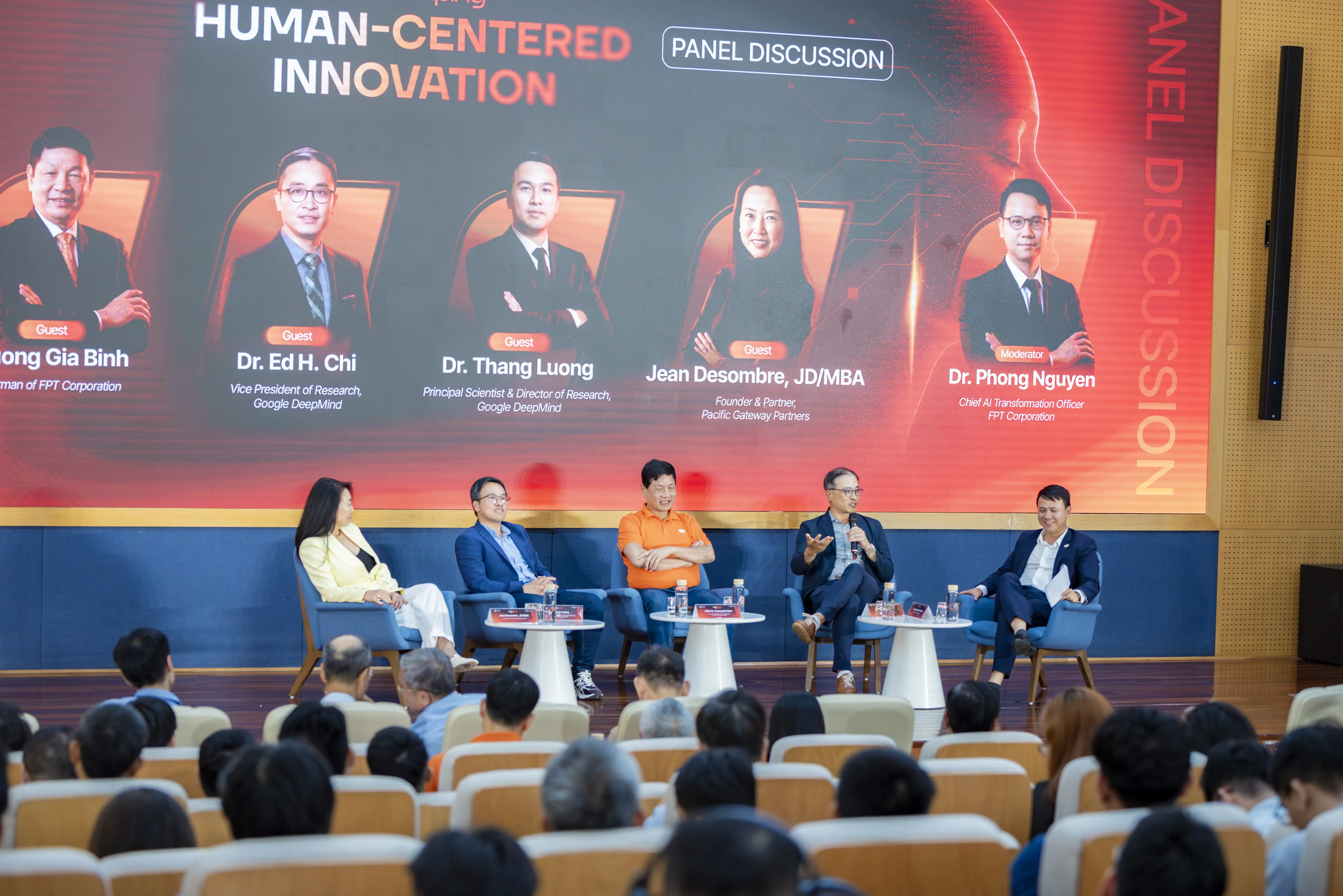
Speakers participate in the panel discussion at the “AI: Shaping Human-Centered Innovation” event.
Speaking at the event, Mr. Truong Gia Binh, Chairman of FPT Corporation and Chairman of the Au Lac AI Alliance, described AI as a turning point for both businesses and nations.
“No one can maintain competitiveness without AI,” he emphasized.
Over nearly four decades of development, FPT has experienced multiple major technology waves, including personal computers, the Internet, mobile networks, and digital transformation. However, according to Mr. Binh, AI represents a fundamentally different shift because it directly impacts how humans create value, operate organizations, and process knowledge.
He stated that humanity is transitioning from the era of industrial factories to “AI factories,” where data and knowledge-processing capabilities become the most critical resources. This transformation requires organizations to redefine the role of humans, approaches to data governance, and collaboration mechanisms between people and AI systems.
According to Mr. Binh, the strength of organizations in the future will depend not only on workforce size but also on their ability to organize and leverage AI systems working alongside humans.
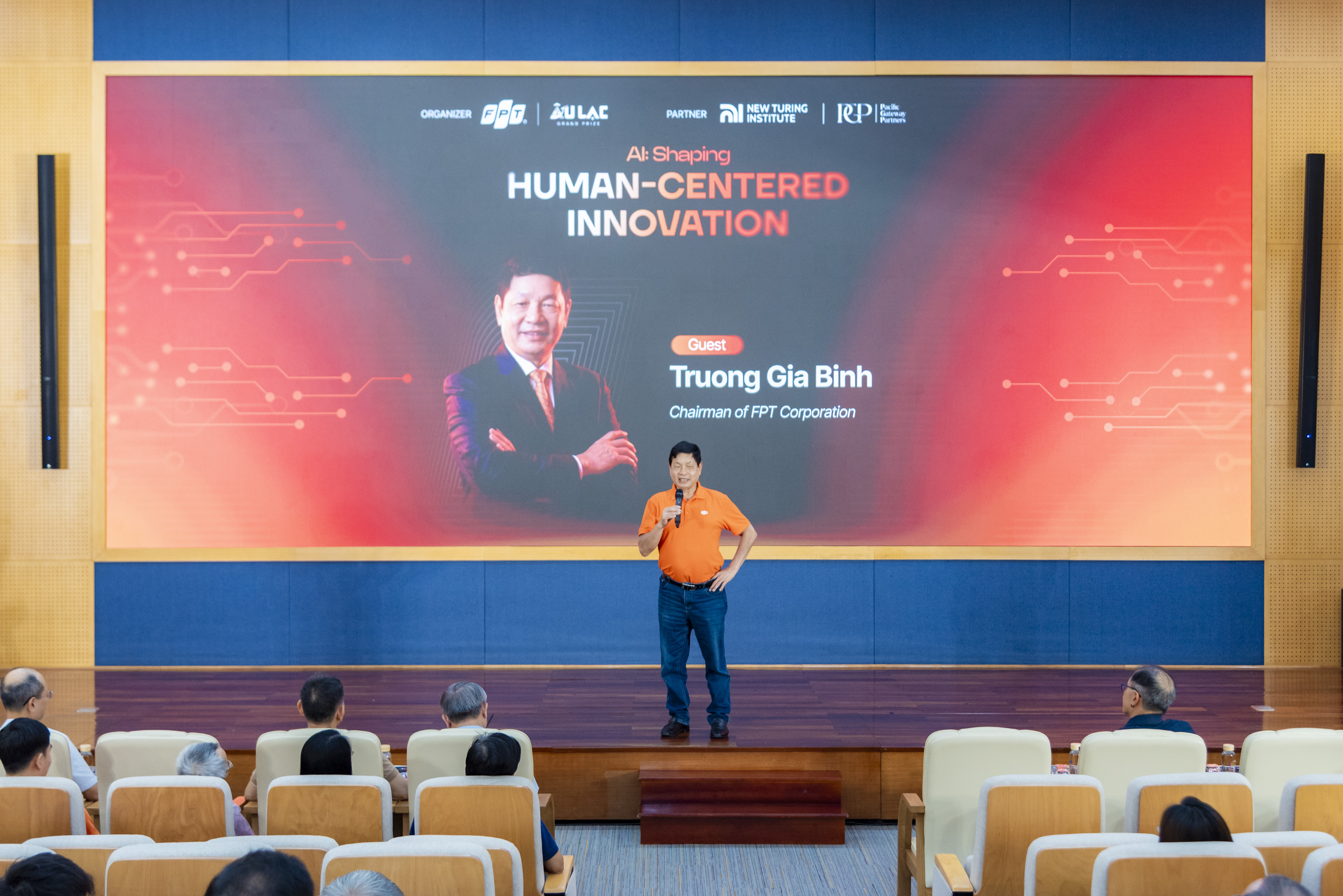
Mr. Truong Gia Binh, Chairman of FPT Corporation and Chairman of the Au Lac AI Alliance.
He added that if deployed effectively and broadly, AI could exponentially improve labor productivity and competitiveness for individuals, organizations, and the Vietnamese economy as a whole. At the same time, he believes Vietnam has the opportunity to become a global provider of AI transformation services.
Mr. Binh argued that Vietnam could overcome the middle-income trap if it effectively leverages its current advantages: strong growth ambition, education, technology, rapid learning capabilities, and the pioneering spirit of the Vietnamese people.
He explained that the establishment of the Au Lac AI Alliance and the launch of the Au Lac Grand Prize stemmed from an urgent need to make AI a widely accessible capability for Vietnamese people, especially younger generations.
According to him, the USD 1 million Au Lac Grand Prize was designed to motivate young Vietnamese talent, encourage them to take on major challenges, learn how to work alongside AI, and build new competitive capabilities in the era of artificial intelligence.
From the perspective of Google DeepMind, Dr. Ed H. Chi, Vice President of Research at Google DeepMind, compared AI to the “engine” of the Industrial Revolution.
“When the engine was invented, you could not simply buy one, place it inside your factory, and consider the job done. You needed engineers who understood how to make that engine work effectively within your factory. The same thing will happen with AI. You cannot simply buy AI from Google, OpenAI, or any other company, put it into a business, and expect it to operate effectively on its own,” he shared.
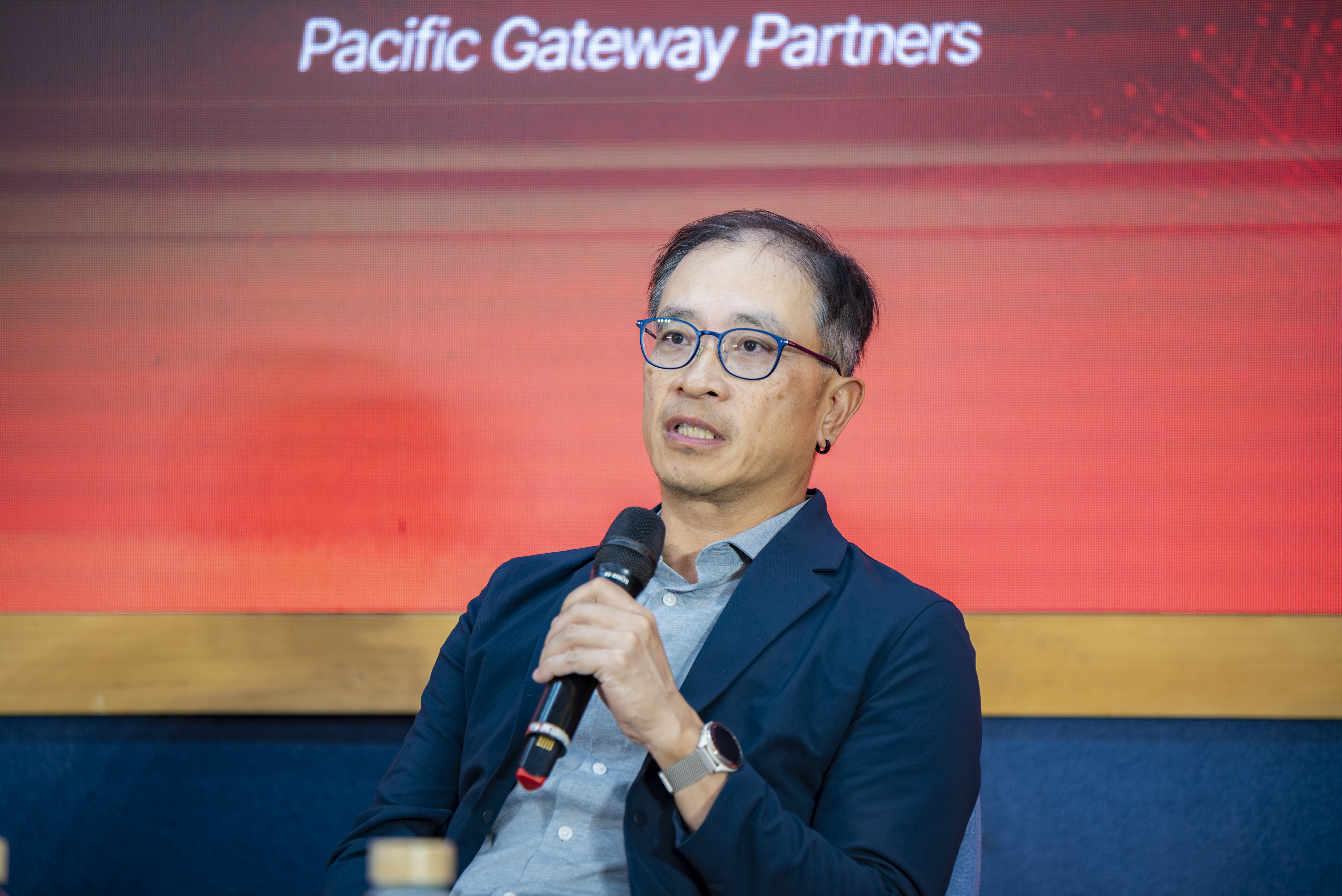
Dr. Ed H. Chi, Vice President of Research at Google DeepMind.
Using this analogy, Dr. Ed H. Chi suggested that Vietnamese engineers and technology companies could become the “modern engineers” of the AI era—people who understand both AI technology and the operational realities of industries, enabling them to apply AI effectively across healthcare, manufacturing, finance, retail, and services.
Building on this perspective, Dr. Luong Minh Thang, Principal Scientist and Research Director at Google DeepMind, Co-founder of the New Turing Institute, and member of the Au Lac Grand Prize Final Jury Council, argued that the most important quality for young people in the AI era is judgment.
According to him, as AI continuously generates suggestions and recommendations, people can easily become passive consumers of information. Therefore, learners must develop the habit of asking critical questions: “Is this suggestion appropriate? Is it reasonable? Does it reflect my own identity and way of thinking?”
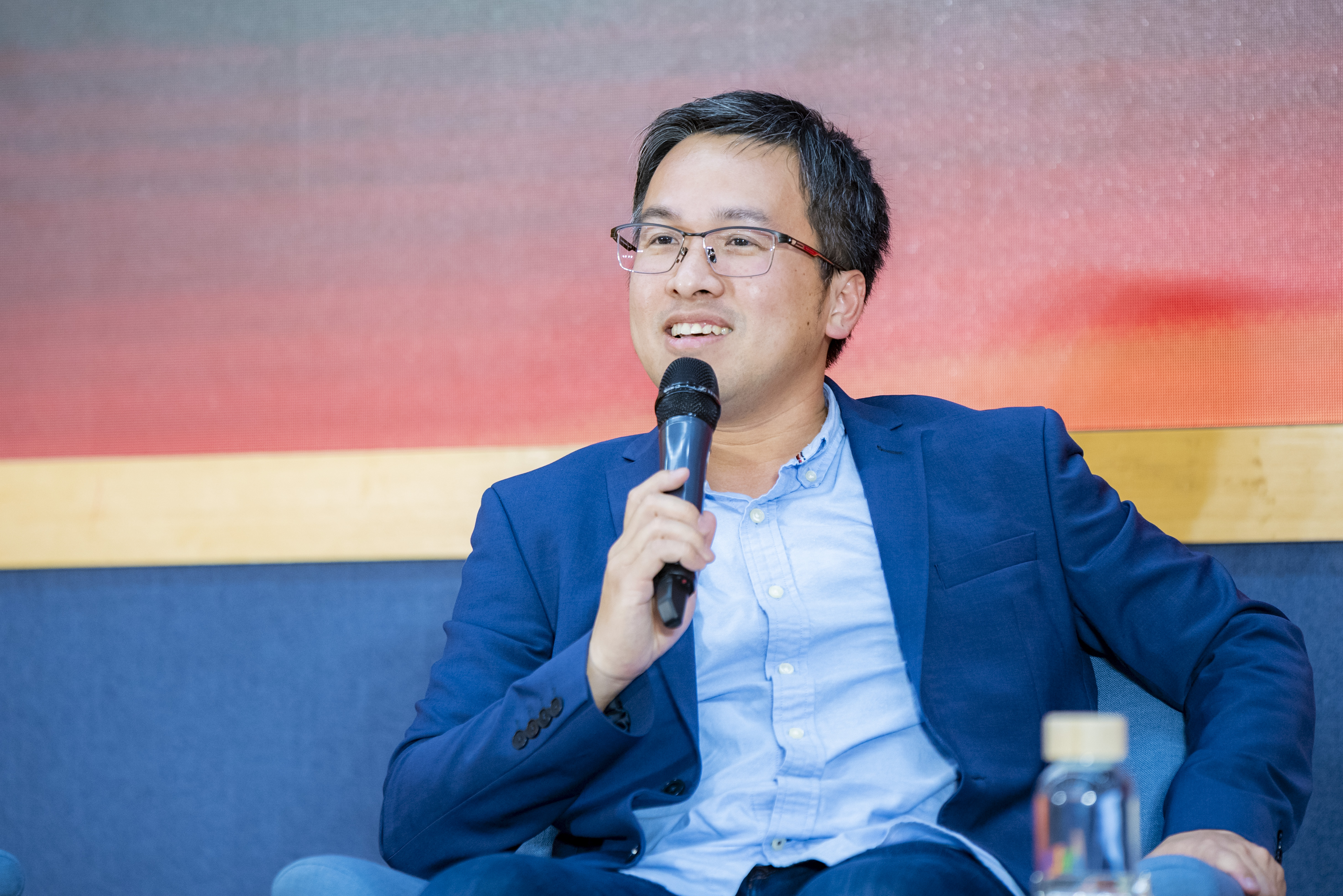
Dr. Luong Minh Thang, Principal Scientist and Research Director at Google DeepMind, Co-founder of the New Turing Institute, and member of the Au Lac Grand Prize Final Jury Council.
He also pointed to a new bottleneck emerging in the AI era: verification. In fields such as mathematics, programming, biology, and drug discovery, AI can generate vast numbers of outputs, but humans still need the capability to evaluate whether those outputs are correct, safe, and trustworthy.
As AI becomes increasingly capable, society will require new roles—people who can verify, interpret, and communicate specialized knowledge to broader communities.
At the same time, he shared his aspiration to help train hundreds of thousands of Vietnamese AI engineers by 2030.
In healthcare, Ms. Jean Desombre, Founder and Partner at Pacific Gateway Partners, stated that AI could support drug discovery, identify new therapies, and process large-scale biomedical data. However, she stressed that technology deployment must begin with the question of how AI benefits people.
“Does AI improve treatment outcomes? Does it give doctors and nurses more time with patients? Does it improve patients’ quality of life? Those are the questions that must come first,” she said.

Ms. Jean Desombre, Founder and Partner at Pacific Gateway Partners.
From the perspective of K-12 education, Professor Po-Shen Loh, mathematician at Carnegie Mellon University, argued that children should be introduced early to AI thinking and problem-solving mindsets.
He emphasized that education in the AI era is not simply about transmitting knowledge but about helping learners think clearly, ask questions, and create value for others. “The goal of education is to benefit humanity,” he stated.
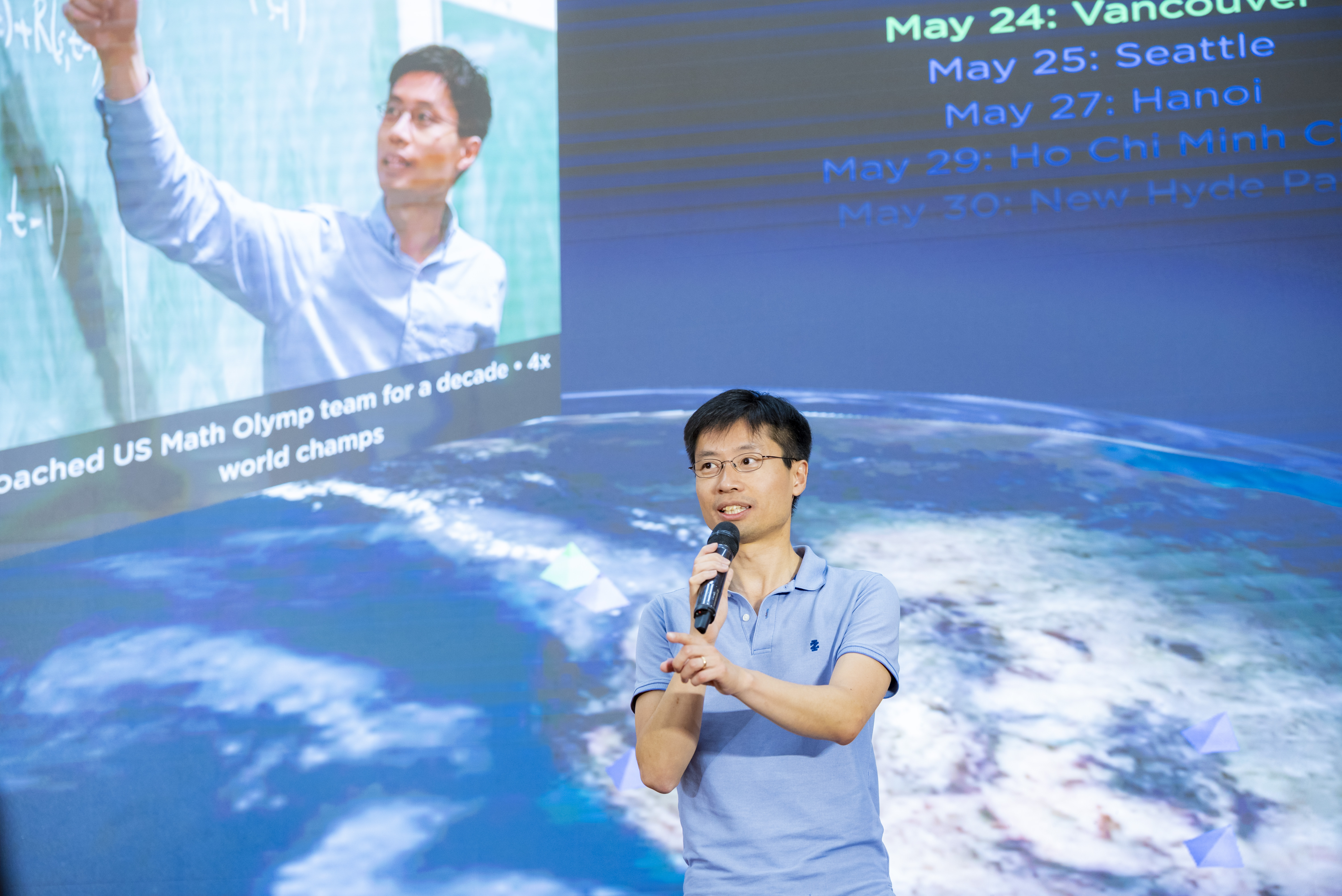
Professor Po-Shen Loh, Mathematics Professor at Carnegie Mellon University.
He has applied this philosophy through LIVE, an online mathematics learning platform he founded that combines live interaction, performance elements, and mentorship from talented mathematicians to make learning more engaging. The model brings the interactive spirit of livestreaming into mathematics education, helping students approach difficult problems in a more accessible way.
Closing the event, speakers agreed that Vietnam’s advantage in AI does not necessarily lie in competing to build the largest models. Instead, the country’s strength may come from early talent development, creating challenging environments through competitions and awards, and applying AI to practical business and societal problems.
The presence of numerous international AI experts in Vietnam at the same time reflects the growing interest of the global technology community in Vietnam’s innovation potential. As AI continues to reshape how people learn, work, and create, gatherings and side discussions such as these not only help update technology trends but also expand international connections and promote dialogue around safe, responsible, and human-centered AI.