Chairman of VINASA, CEO of FPT Nguyen Van Khoa: FPT Commits to Mastering Core Technologies
•
30/12/2025
Hanoi, December 30, 2025 — At the National Forum on the Development of Vietnamese Technology Enterprises 2025, FPT announced that in 2026 it will deploy Vietnamese-language virtual assistants and large language models (LLMs) at scale, serving tens of millions of users and being widely applied across the public sector, finance–banking, and retail. Mr. Nguyen Van Khoa — Chairman of VINASA and CEO of FPT Corporation — shared FPT’s strategic transformation journey in the context where science, technology and innovation are becoming central drivers of national development. At the same event, FPT recorded a strong presence with five products and services ranked in the Top 10 Make in Viet Nam Digital Technology Awards 2025.
The National Forum on the Development of Vietnamese Digital Technology Enterprises (Make in Viet Nam 2025) is a national policy forum combined with an exhibition of more than 50 digital technology products developed by Vietnamese enterprises. The event was organized by the Ministry of Science and Technology with the participation of 1,500 delegates. The Make in Viet Nam Digital Technology Awards 2025 ceremony took place alongside the exhibition.
At the forum, FPT announced its 2026 commitments to deploy Make in Viet Nam products, focusing on Vietnamese-language virtual assistants and large language models at scale. Specifically, FPT committed to deploying a healthcare virtual assistant on the Long Chau platform to support and advise up to 10 million citizens. At the same time, FPT will develop and deploy virtual assistants for public administration, supporting more than 100,000 civil servants and public employees in their daily work and citizen services.
In parallel, FPT aims to bring Vietnamese large language models into real-world application at scale, focusing on key sectors such as finance–banking and retail. These commitments reflect FPT’s approach to core technology development — not stopping at research, but closely linking technology with practical application for citizens, enterprises and the public sector.
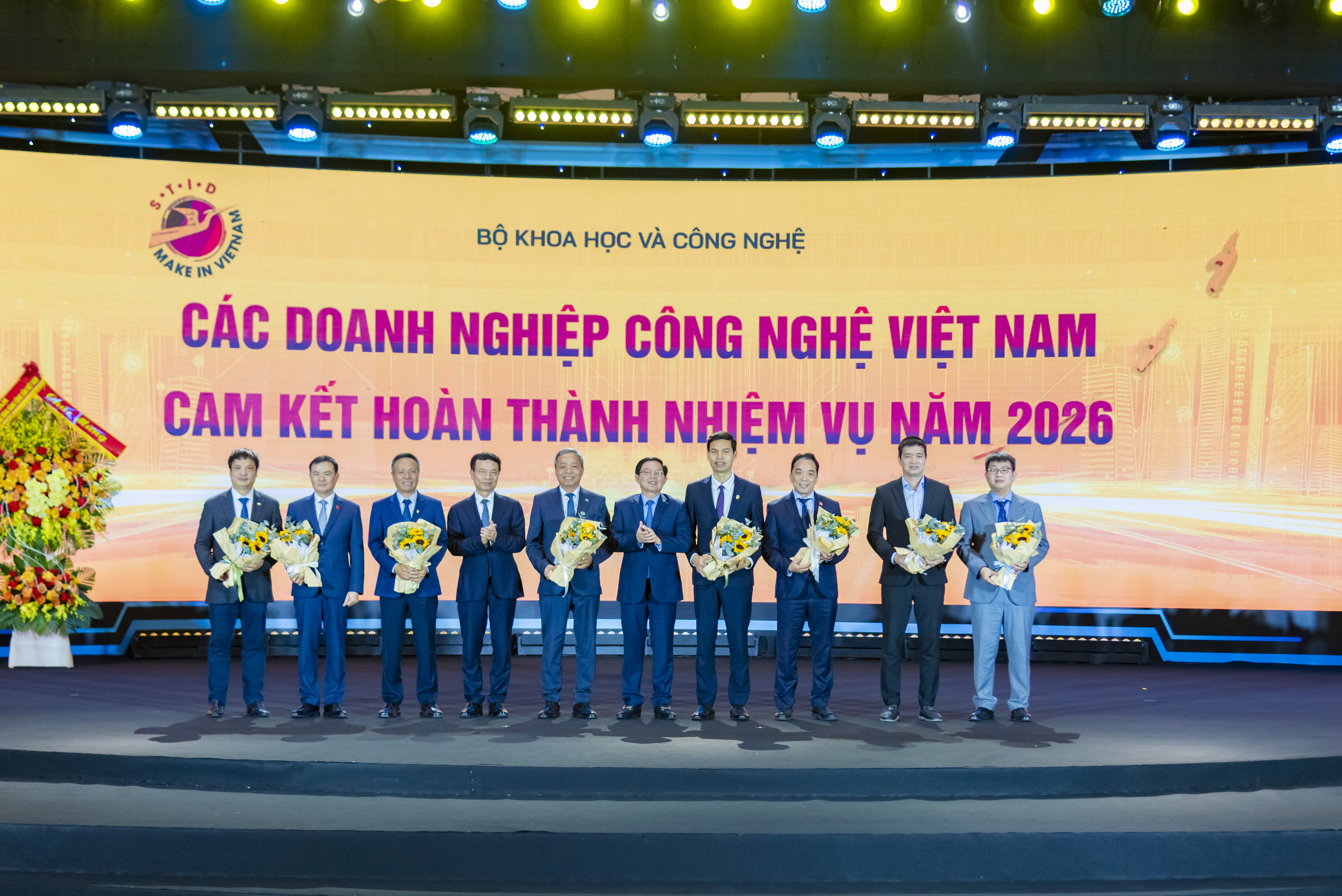
Mr. Nguyen Van Khoa — CEO of FPT Corporation (far left) announces FPT’s Make in Viet Nam commitments at the National Forum on the Development of Vietnamese Technology Enterprises 2025.
Within the framework of the event, Mr. Nguyen Van Khoa delivered a keynote speech titled “Vietnamese Technology Enterprises Mastering Core and Strategic Technologies and Going Global.” He emphasized that Make in Viet Nam is not merely a slogan, but a vital strategic choice for Vietnamese technology enterprises in the new era.
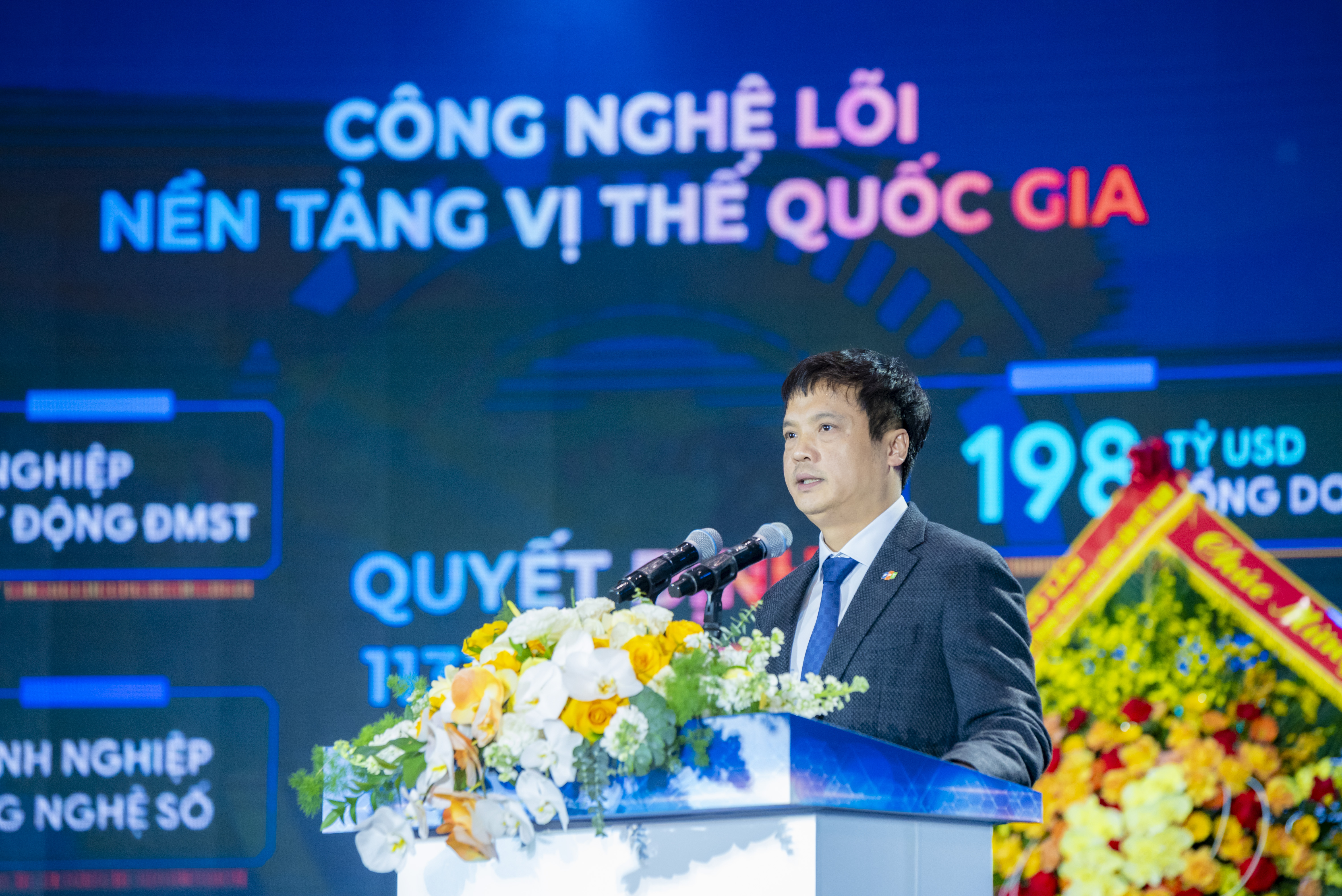
Mr. Nguyen Van Khoa — Chairman of VINASA and CEO of FPT Corporation — delivers his keynote speech at the National Forum on the Development of Vietnamese Technology Enterprises 2025.
According to Mr. Nguyen Van Khoa, for himself and for FPT, Make in Viet Nam is both an inspirational banner and a constant, demanding question. “For FPT, Make in Viet Nam represents a strategic turning point — a difficult, challenging but unavoidable decision,” he stressed.
In the context where science, technology and innovation have been identified as national priorities, FPT has proactively adjusted its strategy — shifting from purely profit-driven growth to long-term investment in science, technology and national endogenous capabilities. Notably, for the first time in its nearly 38-year history, FPT has integrated national strategy into its corporate strategy.
Specifically, on December 3, 2025, FPT established its Strategic Technology Steering Committee, comprising five units: the Quantum AI and Cyber Security Institute (QACI), FPT UAV, FPT Railway Mobility Technology (FMT), FPT Cyber Security, and DC5. This was not merely an organizational adjustment, but a concrete step to institutionalize FPT’s commitment to mastering core technologies.
Alongside technology investment, FPT is transforming its education model toward research-driven development. Faculty members, researchers and experts across FPT’s global network are jointly involved in research and product development, forming a substantive knowledge ecosystem that directly serves FPT’s core technology strategy.
Mr. Nguyen Van Khoa also highlighted the challenges of developing core technologies — products that are “invisible” and embedded deep within systems and infrastructure. A critical question, he said, is whether there is sufficient willingness to experiment, and whether the State is ready to create regulatory sandboxes for Vietnamese enterprises. He emphasized that the most important factor is the spirit of commitment and perseverance.
In closing, Mr. Nguyen Van Khoa reaffirmed FPT’s five major commitments: investing in education and human development; accelerating the application of science and technology in practice; providing and exporting Vietnamese core and strategic technologies globally; building alliances with the science and technology community; and accepting challenges and necessary failures to create new products that make meaningful contributions to Make in Viet Nam and to the nation’s development.
At the Make in Viet Nam Digital Technology Awards 2025, FPT had five products and services ranked in the Top 10:
FPT Insurance Suite (iSuite), an all-in-one digital insurance platform using AI to automate the entire value chain;
FPT Culture Tech, Vietnam’s first all-in-one digital heritage ecosystem using 3D, AI and international-standard archiving;
FPT CX Suite, a next-generation customer experience management platform serving more than 50 million customers of over 100 enterprises;
FPT Camera Agent, an AI camera firmware “Made by FPT” deployed in national security projects; and
FPT AI Factory, a strategic AI platform providing 43 AI services supporting tens of thousands of scientists and engineers.