
Vice Minister of Science and Technology: Technology Enterprises Will Help Lead the Low-Altitude Economy Ecosystem in Dien Bien
•
13/05/2026
At the Dien Bien Investment Promotion Conference 2026, Mr. Bui Hoang Phuong, Vice Minister of Science and Technology, recognized Dien Bien as one of the first localities in Vietnam to register for a controlled pilot model on low-altitude economy and low-altitude airspace. He emphasized: “The participation of major corporations and companies such as Sun Group, Vingroup, FPT, and especially Vietnam’s technology business community, will play a leading role in shaping the ecosystem and creating a strong spillover effect across the province.”
The conference was attended by Politburo Member and Deputy Prime Minister Nguyen Van Thang; Vice Minister of Science and Technology Bui Hoang Phuong; leaders from central ministries and agencies; and nearly 800 domestic and international business leaders and investors.
In his presentation titled “Science, Technology, Innovation and Digital Transformation Open New Development Space and Create a Foundation for Dien Bien’s Double-Digit Growth,” Vice Minister Bui Hoang Phuong stated that amid rapid advancements in science, technology, innovation, and digital transformation, Dien Bien’s geographical characteristics — including mountainous terrain, fragmented infrastructure, and long distances between residential areas and economic centers — could become new development opportunities if addressed through technology.
According to the Vice Minister, Dien Bien is among the first provinces to register with the Ministry of Science and Technology to implement a controlled pilot model for the low-altitude economy and low-altitude airspace. This is not only a new economic development model but also an important policy experiment contributing to the improvement of Vietnam’s institutional framework for science, technology, innovation, and national digital transformation.
“The participation of major corporations and companies such as Sun Group, Vingroup, FPT, and especially Vietnam’s technology enterprise community, will play a leading role in shaping the ecosystem and generating a strong spillover effect across the province,” Vice Minister Bui Hoang Phuong emphasized.
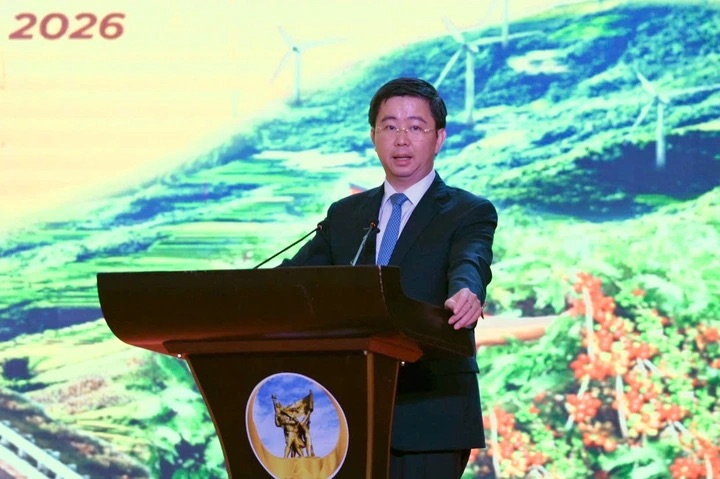
Vice Minister of Science and Technology Bui Hoang Phuong acknowledged the role of technology enterprises in the low-altitude economy ecosystem in Dien Bien. (Photo: Ministry of Science and Technology)
Continuing this direction, Mr. Nguyen Van Khoa, Chairman of the Vietnam Low-Altitude Economy Alliance (LEAP) and CEO of FPT, stated that FPT came to Dien Bien together with the Low-Altitude Economy Alliance, which brings together Vietnamese enterprises with capabilities in science, technology, and unmanned aerial vehicles (UAVs).
The alliance aims to connect capabilities in research, design, manufacturing, testing, and real-world deployment to develop low-altitude economy models suitable for mountainous and border regions. According to FPT, generating real value requires building specific application models closely aligned with the needs of local people, businesses, and authorities.
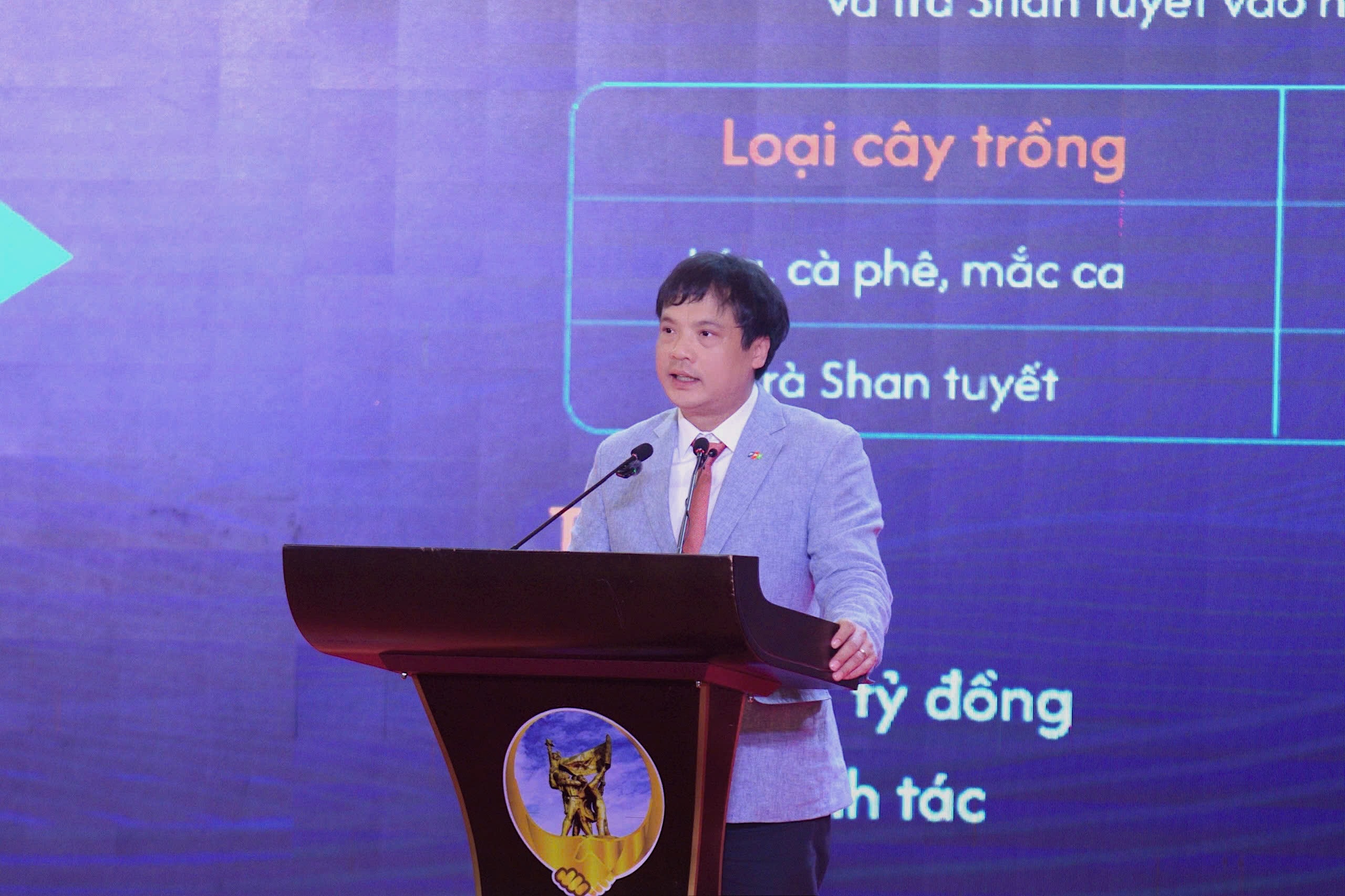
Mr. Nguyen Van Khoa, Chairman of the Vietnam Low-Altitude Economy Alliance (LEAP) and CEO of FPT, speaking at the event.
For Dien Bien, potential applications include agriculture, agricultural logistics, crop monitoring, disease control, forest management, and logistics support in areas with complex terrain.
Dien Bien has approximately 70% of its cultivated land on slopes, making mechanization difficult while labor costs remain high and agricultural productivity limited. FPT and Truong Thinh Drone have piloted UAV applications in agriculture in Dien Bien and recorded many positive results.
UAVs can reduce pesticide spraying time from four hours to just ten minutes per hectare, increase seeding and fertilizer spreading productivity from 0.5–1 hectare per person per day to 40–64 hectares per day in hard-to-access areas, and reduce agricultural logistics costs by approximately 40%.
Based on simulations conducted by FPT across more than 51,000 hectares of key crops such as rice, coffee, macadamia, and Shan Tuyet tea, UAV applications could reduce cultivation costs by 15–20%, save approximately 62 million cubic meters of water annually, and reduce labor costs by 30%. Farmers’ incomes are also expected to increase by VND9–18 million per hectare per year, contributing an additional VND2.63 trillion to the province’s GRDP annually.
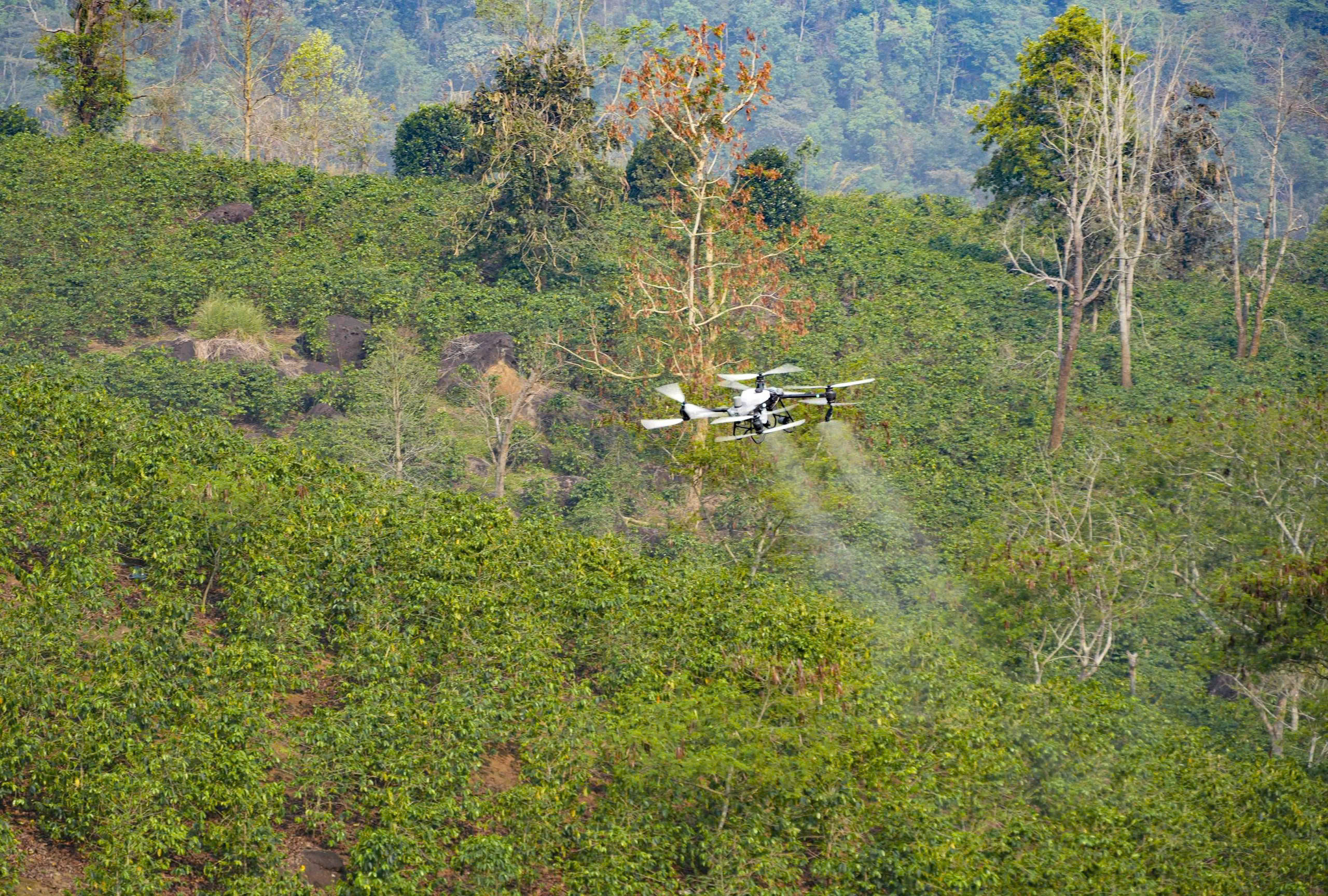
FPT has piloted UAV applications in agriculture in Dien Bien and recorded positive results. Photo: Xuan Tu/TTXVN.
Mr. Nguyen Van Khoa emphasized: “Only when agricultural processes become more standardized and industrialized can we improve the competitiveness of agricultural products and farmers.”
Based on the initial pilot results, FPT proposed two directions for cooperation.
First, Dien Bien could play a leading role by partnering with provinces sharing similar characteristics to jointly validate, refine, and scale low-altitude economy models for mountainous and border regions.
Second, the province and the Low-Altitude Economy Alliance could prioritize one or two key challenges for early deployment, focusing on agricultural applications that directly improve local livelihoods.
In addition to technology applications, FPT also proposed collaborating with Dien Bien to develop human resources for the low-altitude economy sector. Training programs could begin at the high-school level, enabling students in Dien Bien and neighboring provinces to gain early exposure to UAV technology, data, automation, and new digital economy skills.
According to Mr. Nguyen Van Khoa, a stable and long-term policy environment is essential for businesses to confidently invest in emerging sectors such as UAVs and the low-altitude economy.
“The most important factor for businesses is sustainable policy and long-term support. When Dien Bien establishes long-term policies, technology will develop, we will master these challenges, and Dien Bien will strengthen its position and role,” Mr. Khoa stated.
FPT’s proposals in Dien Bien align closely with the Vietnamese Government’s latest strategic technology development orientation. Under Decision No. 21/2026/QD-TTg, aerospace technology is identified as one of Vietnam’s ten strategic technology groups, while UAVs and UAV management and monitoring systems are classified as strategic technology products.
This provides an important foundation for FPT and other Vietnamese technology enterprises to accelerate the application, commercialization, and mastery of UAV technologies in practical sectors such as agriculture, logistics, mountainous and forest management, and border-area operations.

Highlight news
FPT News | 03/07/2025