FPT Proposes “Technology Passport” Mechanism Between Vietnam and India to Enable Cross-Border AI Workforce Mobility
•
07/05/2026
“Instead of competing head-on in the race to build massive AI models that require billions of dollars in investment, Vietnam and India can jointly develop specialized AI models tailored to specific industries and sectors to serve global customers.”
This proposal was made by Mr. Pham Minh Tuan, Deputy CEO of FPT and CEO of FPT Software at the Vietnam–India Innovation Forum held on May 6 in New Delhi, as part of the State visit to India by General Secretary and President To Lam.
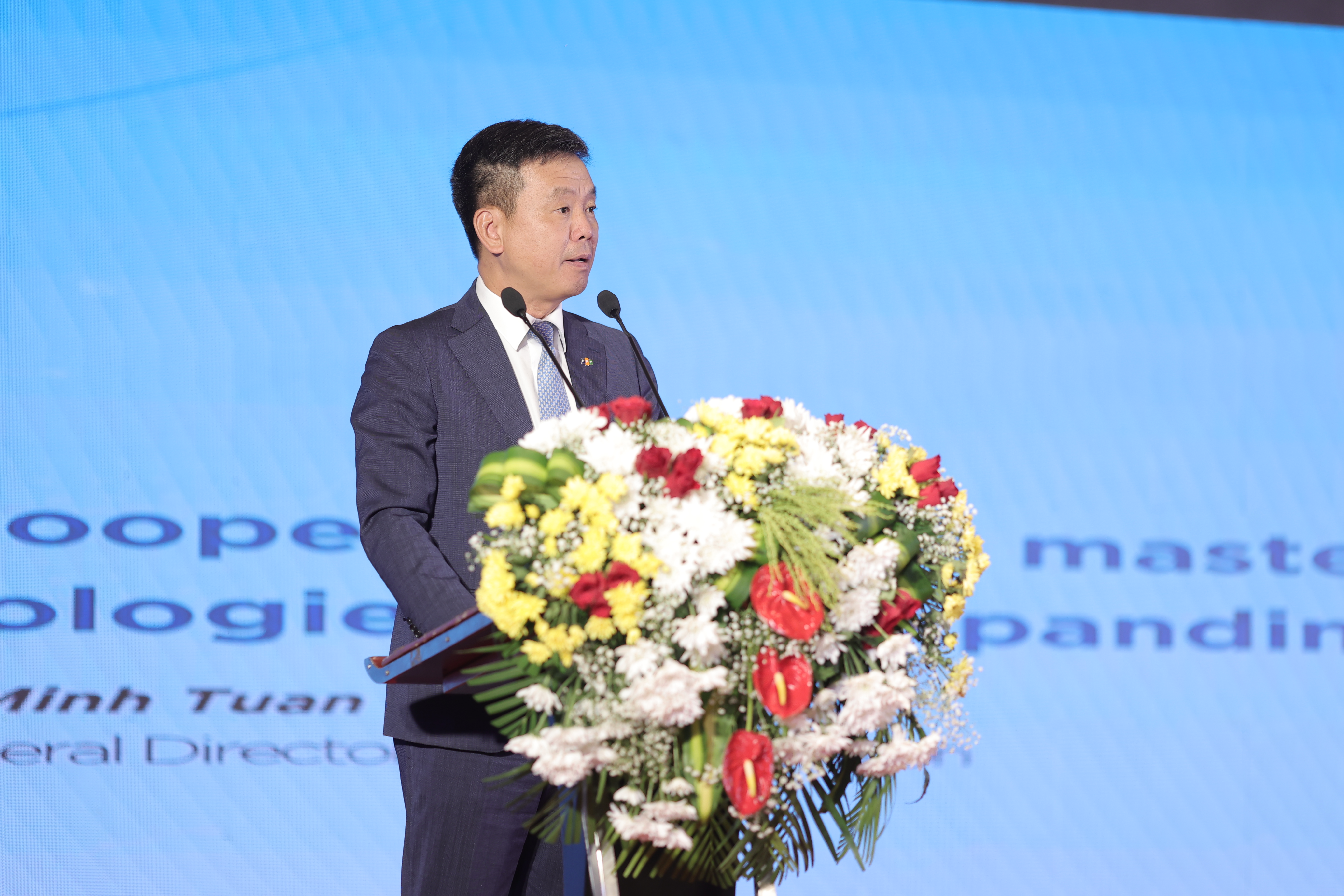
Mr. Pham Minh Tuan, Deputy CEO of FPT and CEO of FPT Software speaks at the Vietnam–India Innovation Forum.
According to the FPT executive, as AI and semiconductors reshape the global technology value chain, Vietnam–India relations are evolving beyond traditional friendship into a potential “strategic technology alliance” aimed at strengthening technological self-reliance and competitiveness in the global tech race.
Mr. Tuan also noted that Vietnam is emerging as a gateway connecting East Asia and Southeast Asia, amid a growing trend of technology manufacturing and R&D shifting into Vietnam. With deep local market expertise and an extensive customer network across the region, FPT is currently partnering with many leading corporations in East and Southeast Asia on their digital transformation and technology innovation journeys.
FPT’s proposals come shortly after high-level meetings between the two countries’ leaders, during which both sides agreed to deepen cooperation linking security and development, while expanding collaboration in strategic technology sectors such as artificial intelligence, digital transformation, innovation, energy, and high-quality workforce development.
In a policy speech delivered at the Indian Council of World Affairs, General Secretary and President To Lam outlined five major directions for Vietnam–India cooperation in the coming years. Among them, elevating and accelerating cooperation in science, innovation, and strategic technologies was identified as a key pillar of bilateral relations.
The Vietnamese leader emphasized that knowledge, technology, and innovation have become primary drivers of growth and decisive factors shaping national competitiveness. This requires deeper and more diverse forms of cooperation in future-defining areas such as the digital economy, data, semiconductors, and AI. Vietnam places particular importance on cooperation with India in science and technology, especially in strategic sectors including semiconductors, artificial intelligence, and digital transformation.
He suggested that the two countries should move beyond strategic alignment toward implementation-level collaboration by identifying priority sectors and concrete execution models, while establishing cooperation programs among research institutes, universities, and enterprises linked to high-quality talent training and mobility.
At the forum, Mr. Pham Minh Tuan stated that Vietnam and India share similar ambitions in mastering strategic technologies such as AI, semiconductors, and quantum technology. While India aims to become a global AI hub leveraging its vast talent pool and technology development experience, Vietnam has also identified AI as a core growth engine for its economy in the coming years.
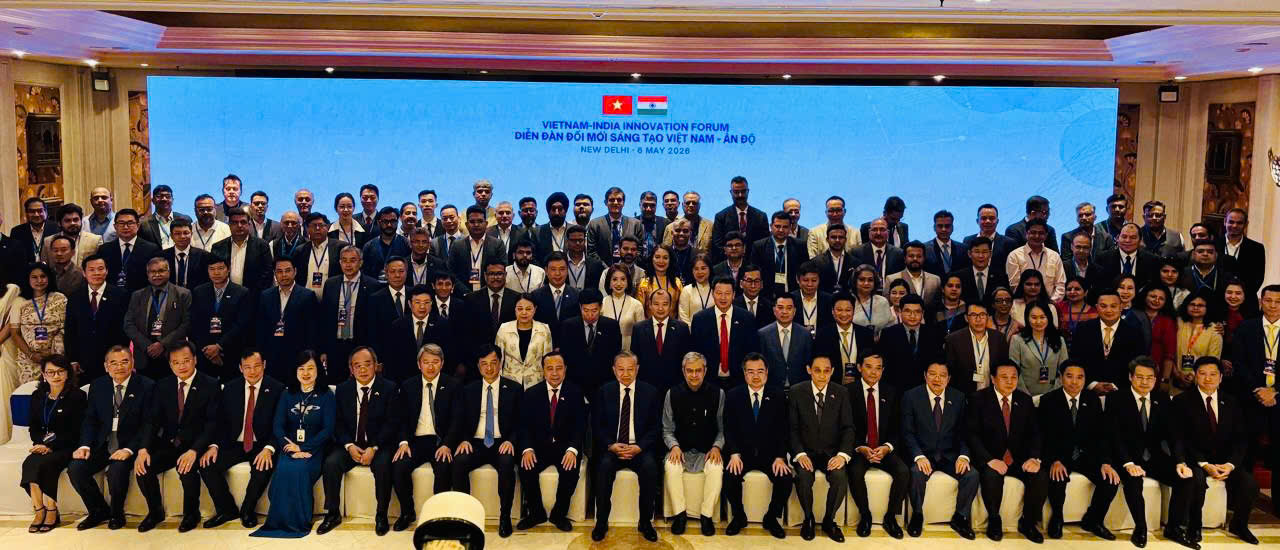
The Vietnam–India Innovation Forum takes place in New Delhi as part of General Secretary and President To Lam’s State visit to India.
Building on the complementary strengths of both countries, the FPT leader proposed the establishment of a “Specialized AI Application Alliance” focusing on sectors such as finance, manufacturing, healthcare, and telecommunications. Rather than competing to develop massive foundational AI models, the alliance would differentiate itself through customization capabilities aligned with the cultural, linguistic, and operational needs of each market and enterprise.
He also proposed a more flexible mechanism for technology talent exchange — similar to a “technology passport” — enabling engineers from both countries to participate in cross-border projects and share high-quality human resources more efficiently.
Beyond AI, FPT introduced several additional proposals for cooperation in strategic technologies between Vietnam and India.
In the semiconductor sector, Mr. Tuan suggested that the two countries build complementary supply chains. India could focus on wafer design and manufacturing, while Vietnam strengthens its advanced packaging and semiconductor testing capabilities (OSAT). This model aligns with the development strategies of both countries while maximizing their respective advantages.
In railway technology and UAVs, the FPT executive proposed that the two countries share open platforms and simulation labs, while jointly deploying pilot projects involving AI-integrated UAVs for agriculture, surveillance, and industrial applications.
Another key focus highlighted by FPT was strategic technology workforce development. The company proposed expanding existing education partnerships, increasing student exchange programs, and creating opportunities for students from both countries to intern in areas such as software engineering, AI, and semiconductors.
According to Mr. Pham Minh Tuan, Vietnam’s greatest advantages lie in its agile implementation capability, rapid adaptability, and innovation-friendly ASEAN environment. Meanwhile, India possesses a large domestic market and a workforce of approximately six million IT engineers and specialists, making it one of the world’s leading technology hubs. This complementarity could create new growth momentum for both economies.
The FPT representative also spent significant time discussing the corporation’s technological capabilities and global experience. FPT currently controls multiple layers of the AI value chain, with 70 specialized AI models for industry-specific applications, two AI factories in Vietnam and Japan, and approximately 30,000 AI-enabled engineers. In semiconductors, the company has trained more than 3,300 students and employs nearly 1,000 chip design and embedded software engineers.
FPT currently operates in more than 30 countries with employees from 82 nationalities. Notably, FPT’s first steps into the international market began in Bangalore in 1999. Today, Indian employees represent the third-largest nationality group within FPT, after Vietnamese and Japanese employees.
According to many experts, as Vietnam and India increasingly align in development vision and strategic priorities, areas such as AI, innovation, and digital transformation are expected to become key pillars of bilateral cooperation in the years ahead.