
FPT proposes leveraging data and AI as the foundation for smart urban railway development
•
14/03/2026
Globally, metro systems are increasingly viewed not merely as public transport infrastructure, but as the “backbone” of smart urban ecosystems. They are closely tied to Transit-Oriented Development (TOD), multimodal connectivity, digital platforms such as Mobility as a Service (MaaS), and real-time data utilization to optimize operations and reduce emissions. Cities like Tokyo, Hong Kong, Singapore, Helsinki, Seoul, and Shenzhen have developed metro systems as integrated platforms combining transport, space, services, and data within a unified ecosystem.
In this context, developing metro systems in Vietnam is not only a transportation infrastructure challenge but also an opportunity to build foundational data and technology platforms for smart cities. According to planning projections, Ho Chi Minh City aims to develop approximately 1,012 km of urban rail with an estimated investment of USD 103.4 billion, while Hanoi plans over 600 km with a capital requirement of around USD 55.4 billion. This large-scale investment underscores metro’s critical role in restructuring urban mobility, reorganizing spatial development, and driving next-generation urban services.
To discuss this vision and the associated workforce demands, the Vietnamese-German University, in collaboration with the Ho Chi Minh City Department of Construction, the HCMC Urban Railway Management Authority (MAUR), the HCMC Urban Railway Operating Company, FPT, and partners, organized a thematic seminar titled: “From Smart Railways to Smart Mobility and Smart Cities: Workforce Demand.” The seminar focused on metro development, smart mobility, smart cities, and the need for high-quality human resources in this field in Vietnam.
According to Nguyễn Duy Thạch, Director of the Investment Preparation Division at MAUR, Ho Chi Minh City is entering a large-scale metro development phase aligned with its long-term urban strategy and the Southern Key Economic Region. The planned network spans approximately 1,024 km across 27 lines, connecting Ho Chi Minh City with Bình Dương and Bà Rịa–Vũng Tàu. These lines are designed to link the city center with new urban areas, industrial zones, seaports, airports, and ring-road transport systems. Once completed, the network will serve as the backbone of public transport, integrated with buses, BRT, and personal mobility options.
Meanwhile, Trần Võ Anh Minh, Deputy Head of the Urban Railway Management Division (HCMC Department of Construction), emphasized that metro development is not just about infrastructure but also about human capital. Forecasts indicate that by 2045, the workforce required for operation and maintenance could reach around 17,000 people, while construction-related roles may exceed 20,000.
At the seminar, Mr. Phan Thanh Sơn, Strategy Director of FPT Railway Mobility Technology, FPT Corporation, shared a technology enterprise perspective on the role of big data and artificial intelligence (AI) in planning, design, management, and operation of urban rail systems. He highlighted that Vietnam has a significant opportunity not only to build new metro lines but also to develop indigenous technological capabilities for the railway sector. By combining infrastructure investment, data strategy, enterprise ecosystems, and workforce development, Vietnam can accelerate technology adoption, gradually master core components, and eventually export solutions.
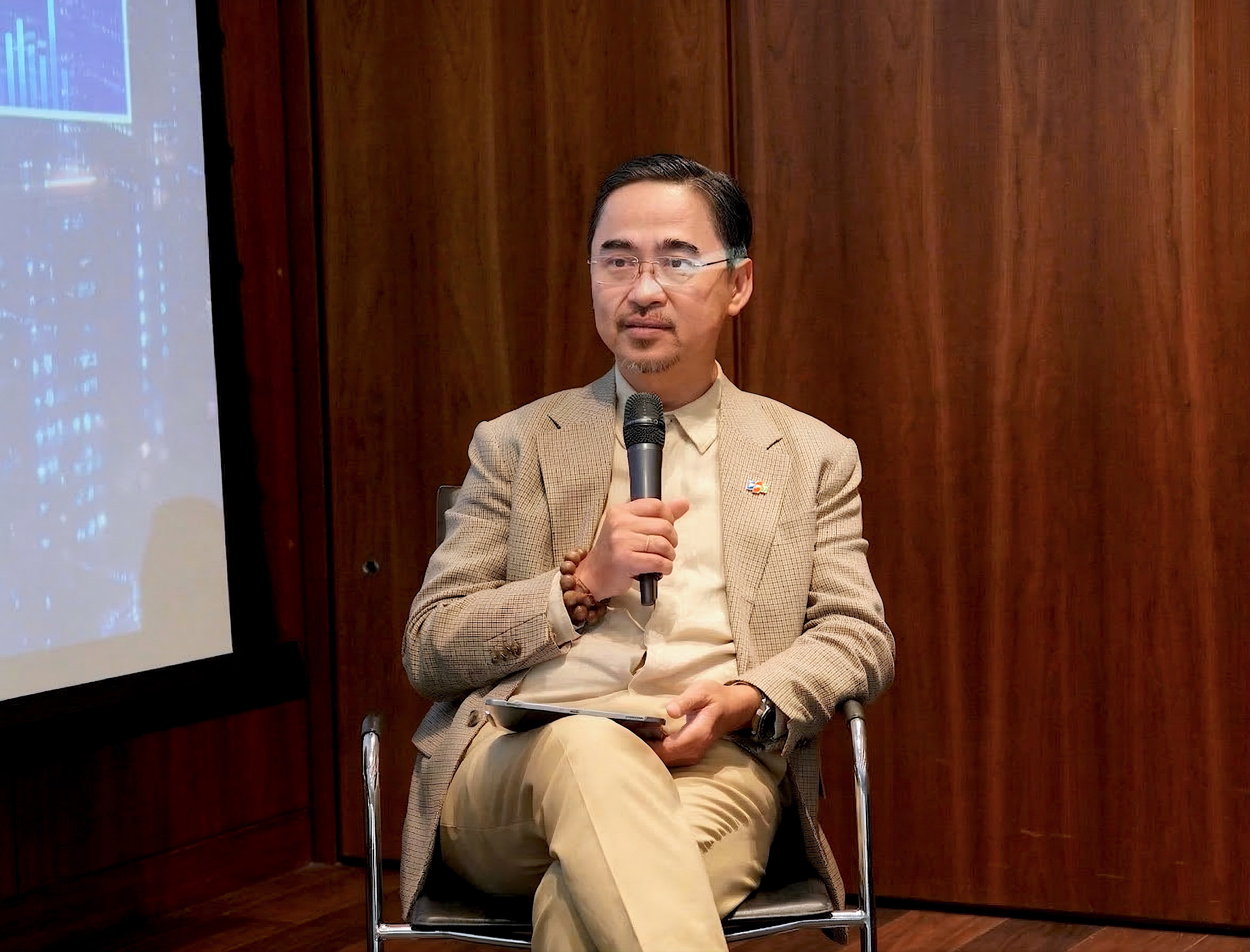
Mr. Phan Thanh Sơn sharing insights at the event.
FPT emphasized that the greatest value of metro systems in smart cities lies not only in passenger transport capacity but also in their ability to create a technology ecosystem. This ecosystem can support demand forecasting, operational optimization, public safety, urban spatial organization, and the development of new services centered around stations, journeys, and multimodal hubs.
Drawing from practical experience, Mr. Phan Thanh Sơn proposed key directions for developing urban rail in Vietnam. First, metro systems should be built on a data- and AI-driven foundation, with AI and big data applied across the entire lifecycle—from planning and design to operation and management—while treating transport infrastructure data as a strategic national asset.
Second, metro project implementation should follow a roadmap toward technological self-reliance. Lessons from countries such as South Korea and China show that acquiring and developing core technologies in design, operation, and maintenance is essential to reduce dependence on foreign consultants and vendors, while strengthening domestic capabilities.
.jpg)
China is applying AI to modernize railway systems, from operations management and infrastructure monitoring to efficiency optimization (Photo: East Asia Forum).
FPT also stressed the need for Vietnam to build a comprehensive railway technology ecosystem, with domestic technology enterprises playing a central role in connecting investment, research, and innovation resources. At the same time, a workforce development strategy for smart mobility is essential, promoting collaboration under the 5P model (Public – Private – Professional – People Partnership), bringing together government, businesses, academia, society, and citizens to train a new generation of engineers and experts for the AI era.
To deepen its involvement in this field, FPT established FPT Railway Mobility Technology in late 2025, focusing on developing solutions for railways, smart mobility, and smart cities. The Group is ready to collaborate with the government, local authorities, and partners to develop Smart Metro and Smart TOD solutions, while acting as a bridge between Vietnam’s technology ecosystem and international partners.
With more than a decade of experience in digital transformation projects in transportation and urban sectors in Vietnam, FPT has implemented various solutions, including intelligent traffic systems, transportation data platforms, the GoBus application for public transport in Ho Chi Minh City, as well as electronic payment and operational management systems for metro networks.

Highlight news
FPT News | 03/07/2025