FPT Contributes AI and Sustainable Governance Solutions at the Vietnam–Asia Smart City Conference 2025
•
24/12/2025
Hanoi, December 23, 2025 — Speaking at the Vietnam – Asia Smart City Summit 2025, Mr. Nguyen Van Khoa, Chairman of the Vietnam Software and IT Services Association (VINASA) and Chief Executive Officer of FPT Corporation, stated that smart city development in Vietnam is entering a new phase — one where the focus is no longer on isolated infrastructure or hardware investments, but on operating cities based on data and artificial intelligence (AI).
At the same event, experts from FPT Corporation actively contributed with in-depth technical presentations, offering perspectives and solutions for the development of green, smart and sustainable cities.
The Vietnam – Asia Smart City Summit 2025 is a national-scale event co-organized by the Hanoi Department of Science and Technology and VINASA, under the patronage of the Ministry of Science and Technology and the direction of the Hanoi People’s Committee.
In his opening remarks, Mr. Nguyen Van Khoa emphasized that smart cities are evolving from being merely “connected cities” into “cognitive and human-centric cities” — cities that leverage data and AI in a meaningful, responsible and people-oriented way.
“Data is becoming the core foundation of urban governance and digital government operations. In the past, when we talked about smart cities, we focused mainly on surveillance systems, cameras and sensors. These components remain important, but today they occupy a different position — especially now that Resolution 57 has set a clear direction for Vietnam to advance through science and technology,” Mr. Khoa said.
He also highlighted the role of AI in solving concrete urban challenges such as traffic congestion, environmental pollution, natural disasters, quality of life and food safety. AI applications, he stressed, must go beyond technology showcases and move toward real operational impact and decision support.
When data and AI are integrated coherently, cities can truly “live with data” and operate in an intelligent and sustainable manner.
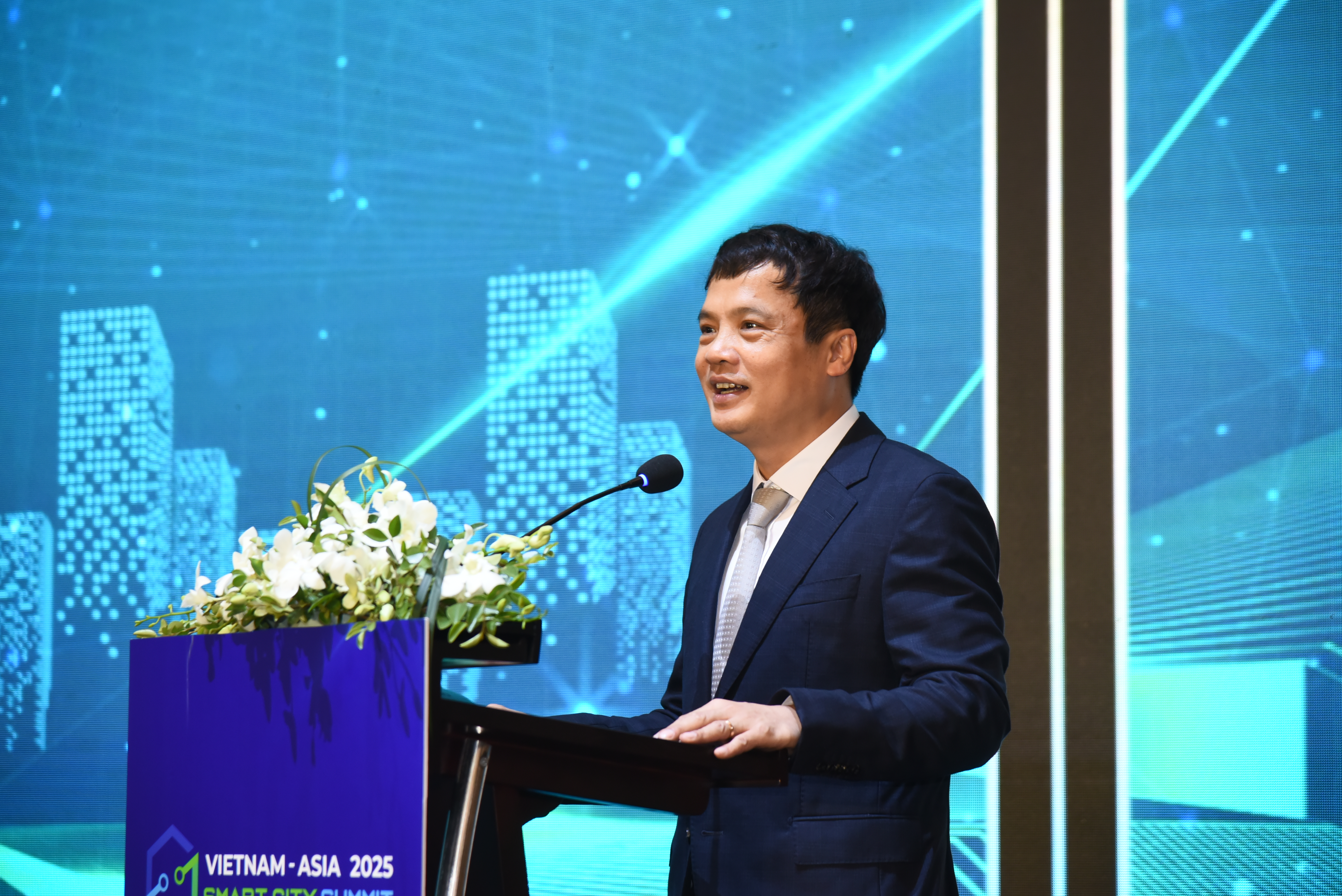
Mr. Nguyen Van Khoa, Chairman of VINASA and CEO of FPT Corporation, delivering his remarks at the Summit.
Mr. Khoa further noted that Vietnam is rapidly completing its national data platforms, while local governments are building vertical data systems — where the central government holds the data, ministries develop sectoral platforms, and local authorities generate and exploit data.
However, to achieve double-digit economic growth, horizontal data sharing between localities is essential. This, he said, will become a new measure of “smartness” for Vietnamese cities.
VINASA and the Vietnamese ICT business community, he affirmed, are ready to accompany the Government and local authorities, actively participate in policy formulation, pilot innovative models and deploy “Make in Vietnam” solutions to build smart, green and sustainable cities.
CTO of FPT proposes building a “City Brain”
In the plenary session, Mr. Vu Anh Tu — Chief Technology Officer of FPT Corporation and Director of FPT UAV — analyzed the major challenges facing Hanoi, including traffic congestion, environmental pollution, urban flooding, public order and food safety.
Given the city’s large population and high density, he argued that these challenges cannot be addressed through traditional management approaches, but require a new urban governance model based on AI, real-time data and intelligent sensor systems — similar to what leading global cities are adopting.
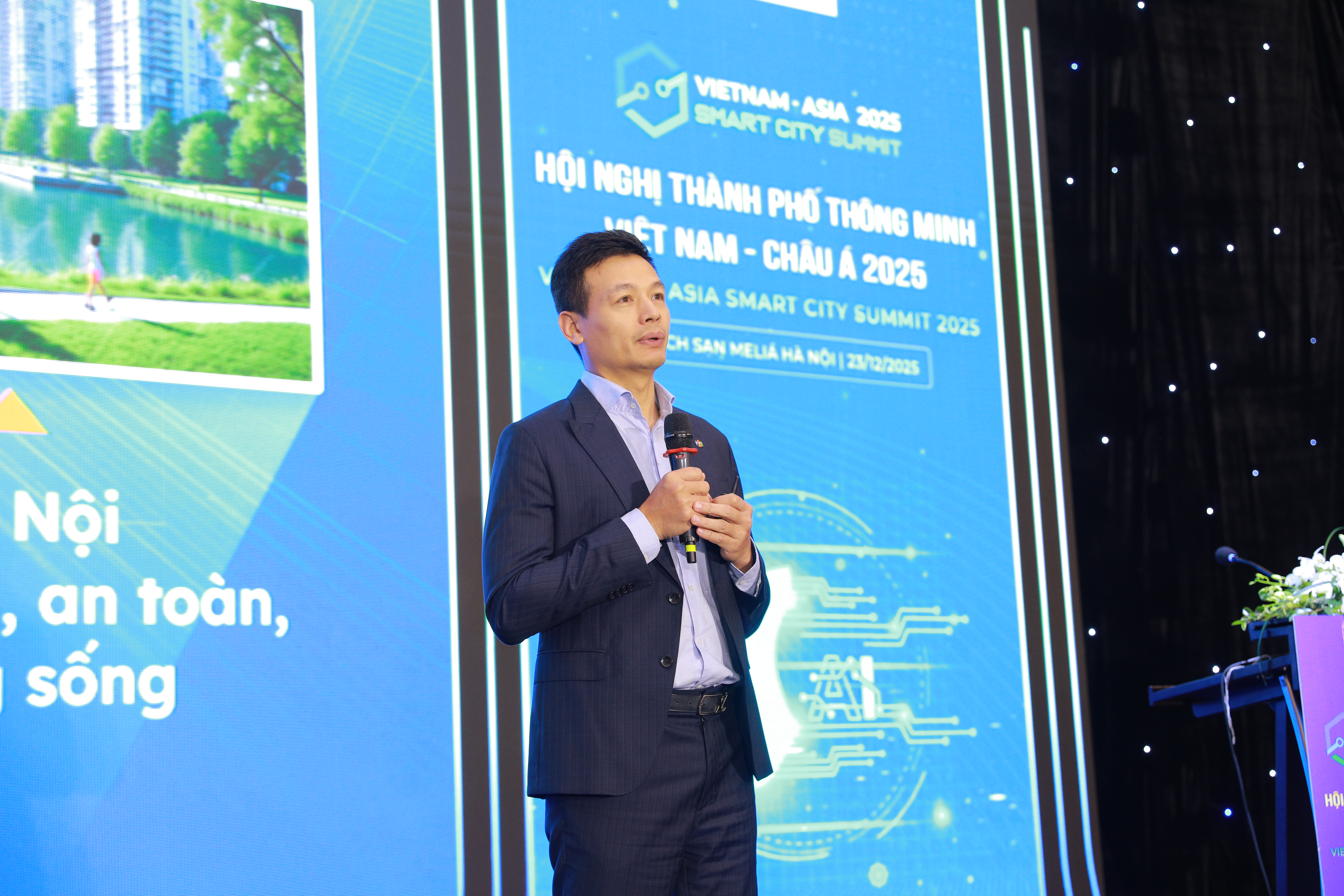
Mr. Vu Anh Tu, Chief Technology Officer of FPT Corporation and Director of FPT UAV, speaking at the Summit.
From this perspective, Mr. Vu Anh Tu proposed a holistic approach in which the core of a smart city is a “City Brain” — an AI-based system capable of integrating and analyzing multi-source data to address complex urban problems.
He noted that Hanoi has already made progress in areas such as traffic violation detection and enforcement. In the future, however, the system could go further by tracking pollution-emitting or overloaded vehicles, analyzing their impact on the environment and infrastructure, and generating forecasts and policy recommendations.
With its comprehensive technology ecosystem spanning AI, Big Data, Quantum AI, cybersecurity and digital citizen platforms, FPT expressed its desire to accompany Hanoi in building a data-driven, AI-enabled city supported by modern computing infrastructure. This would enable simulation, forecasting and response to complex scenarios such as natural disasters and climate events, as well as future urban development scenarios.
FPT experts share approaches to smart and sustainable urban development
In the session “AI in Smart City Governance and Operations,” Dr. Pham Quang Nhat Minh, Director of the AI Research and Development Center at FPT IS, presented the topic “Applying AI to support decision-making and citizen-centric public services.”
He explained that AI-driven cities are gradually emerging through applications in environmental management, disaster response, urban operations and digital public services. However, the key prerequisite remains a high-quality national data foundation that is accurate, sufficient, clean and live.
With quality data, AI can create tangible impact in the public sector across three levels:
• Strategic: policy analysis, simulation and scenario comparison;
• Operational: process automation, resource optimization and workload reduction;
• Experiential: proactive public services, personalized citizen interaction and greater fairness and transparency.
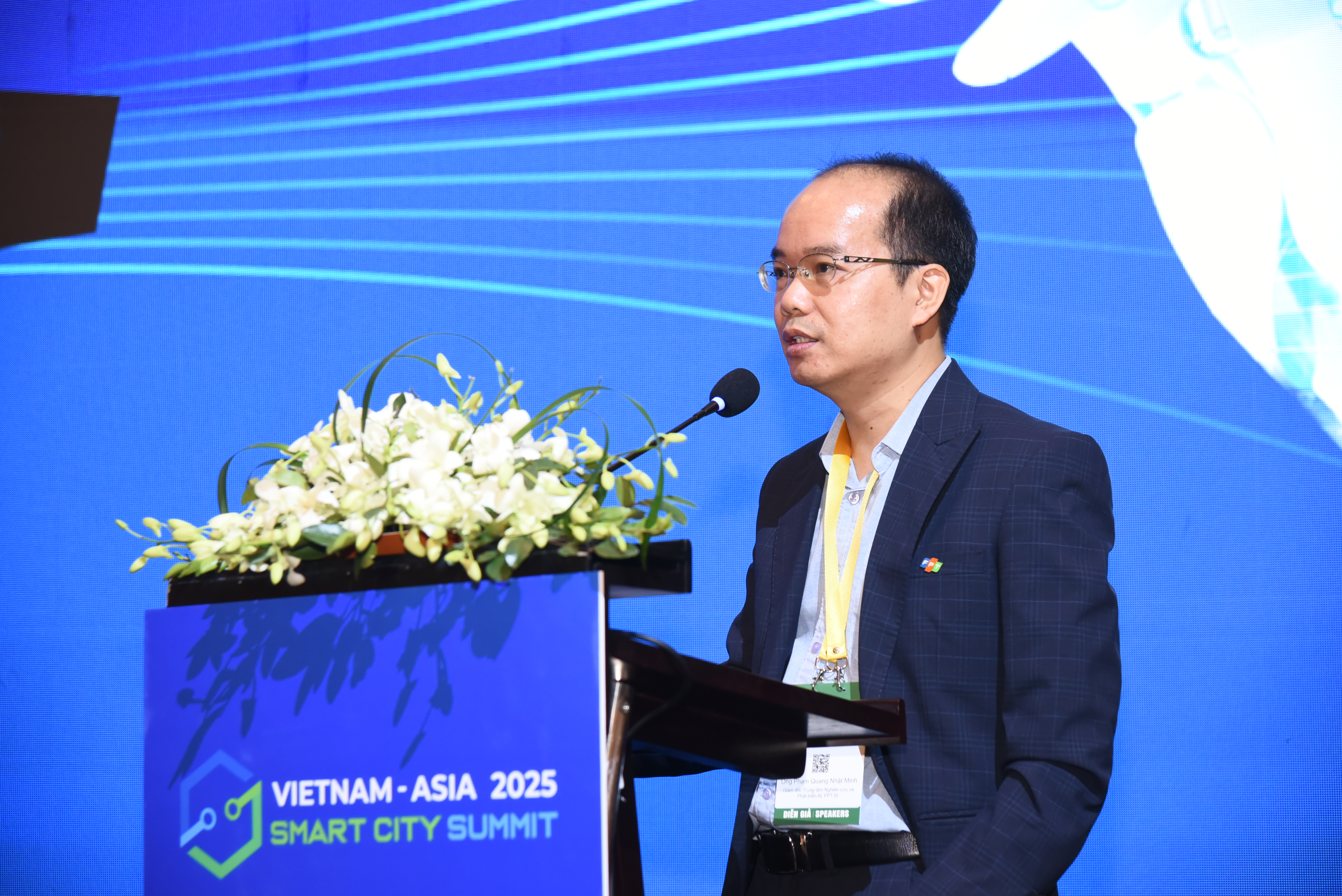
Dr. Pham Quang Nhat Minh presenting in the session “AI in Smart City Governance and Operations.”
In another session, “Digital Solutions for Smart Construction,” Dr. Tran The Trung, Director of the FPT Institute of Technology Research, discussed AI applications in construction and urban management. He emphasized the role of AI, data and digital platforms in managing the lifecycle of buildings, supervising construction, operating cities and developing digital city models.
He cited examples such as Kaohsiung (Taiwan), where AI supports real-time traffic and disaster monitoring, and Ho Chi Minh City, where AI is used to supervise construction progress at the An Phu intersection, improving response times and project management.
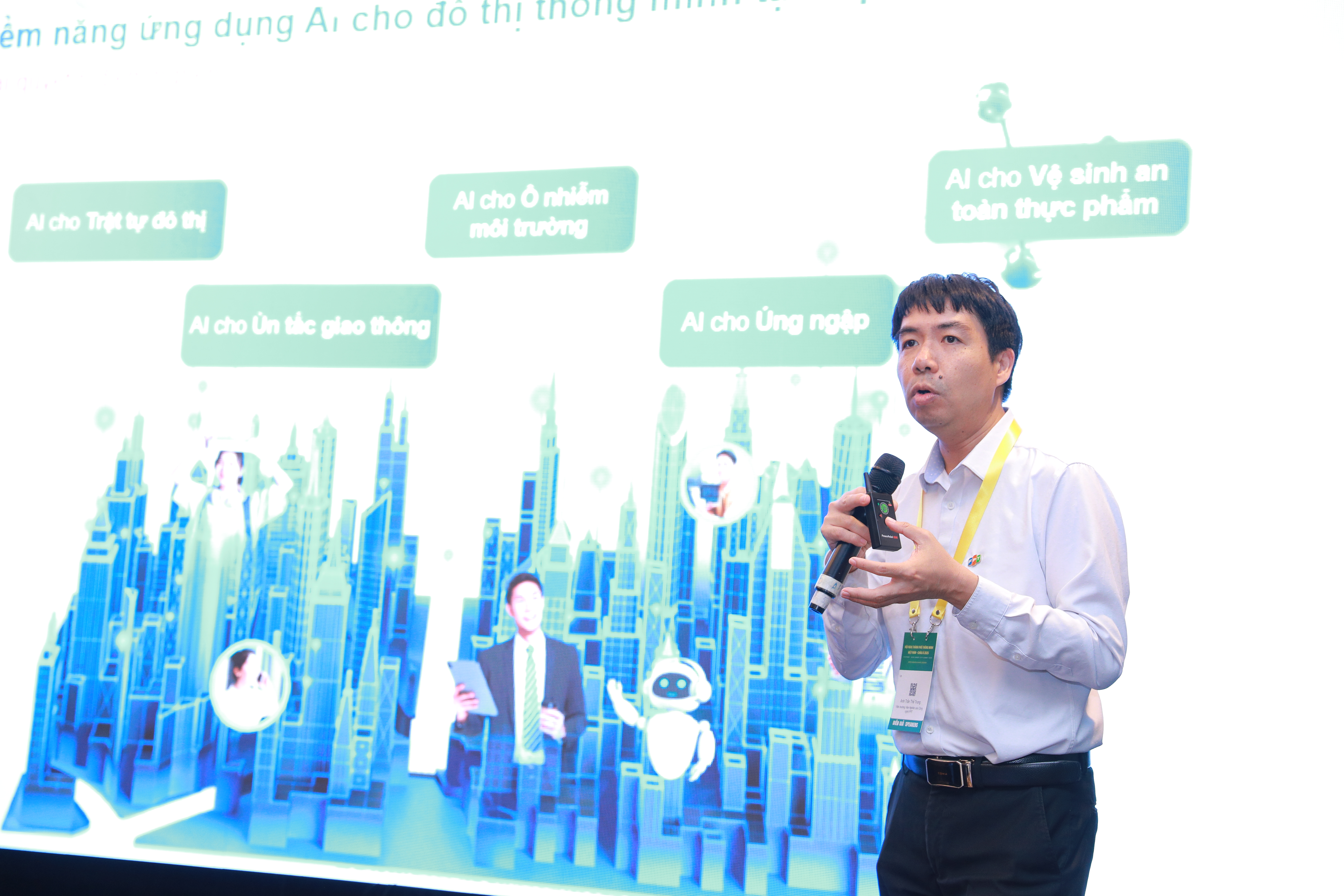
Dr. Tran The Trung sharing insights on AI applications in smart construction and urban management.
All solutions are developed and operated on FPT’s AI Factory infrastructure, powered by thousands of NVIDIA H100 and H200 GPUs, enabling large-scale deployment of smart city applications.
In the session “Green Energy, Smart Mobility and Sustainable Development toward Net Zero 2050,” Mr. Nguyen Tuan Anh, Director of Digital Transformation and Sustainability Consulting at FPT Digital, presented “From ESG to Net Zero: Strategies and tools for emissions management for cities and enterprises.” His presentation introduced digital tools and governance platforms that help cities and businesses measure, manage and reduce emissions in line with ESG requirements and Net Zero commitments.
FPT’s participation and contributions at the Vietnam – Asia Smart City Summit 2025 reaffirm its role as a strategic partner of the Government and local authorities in building smart, green and sustainable cities based on AI, data and core technologies — with the ultimate goal of improving quality of life and enhancing the competitiveness of Vietnamese cities in the region.