
FPT leadership: “A business alliance is committed to advancing Vietnam’s semiconductor ecosystem”
•
11/03/2026
At the first 2026 meeting on semiconductor industry development, chaired by Deputy Prime Minister Nguyễn Chí Dũng—Head of the National Steering Committee for Semiconductor Industry Development—Trần Đăng Hòa, Chairman of FPT IS (FPT Corporation), proposed recommendations to strengthen collaboration between the Government and enterprises, accelerate ecosystem development, and enable Vietnam to move deeper into the global value chain in line with Resolution No. 57-NQ/TW.
The meeting was attended by leaders from multiple ministries and agencies, including Science and Technology, Finance, Education and Training, Industry and Trade, Construction, Justice, Agriculture and Environment, and the Government Office; representatives from local authorities such as Hanoi, Ho Chi Minh City, Da Nang, and Bac Ninh; universities including Vietnam National University (HCMC and Hanoi) and Hanoi University of Science and Technology; as well as technology corporations such as FPT, Phenikaa, and VSAP Lab.
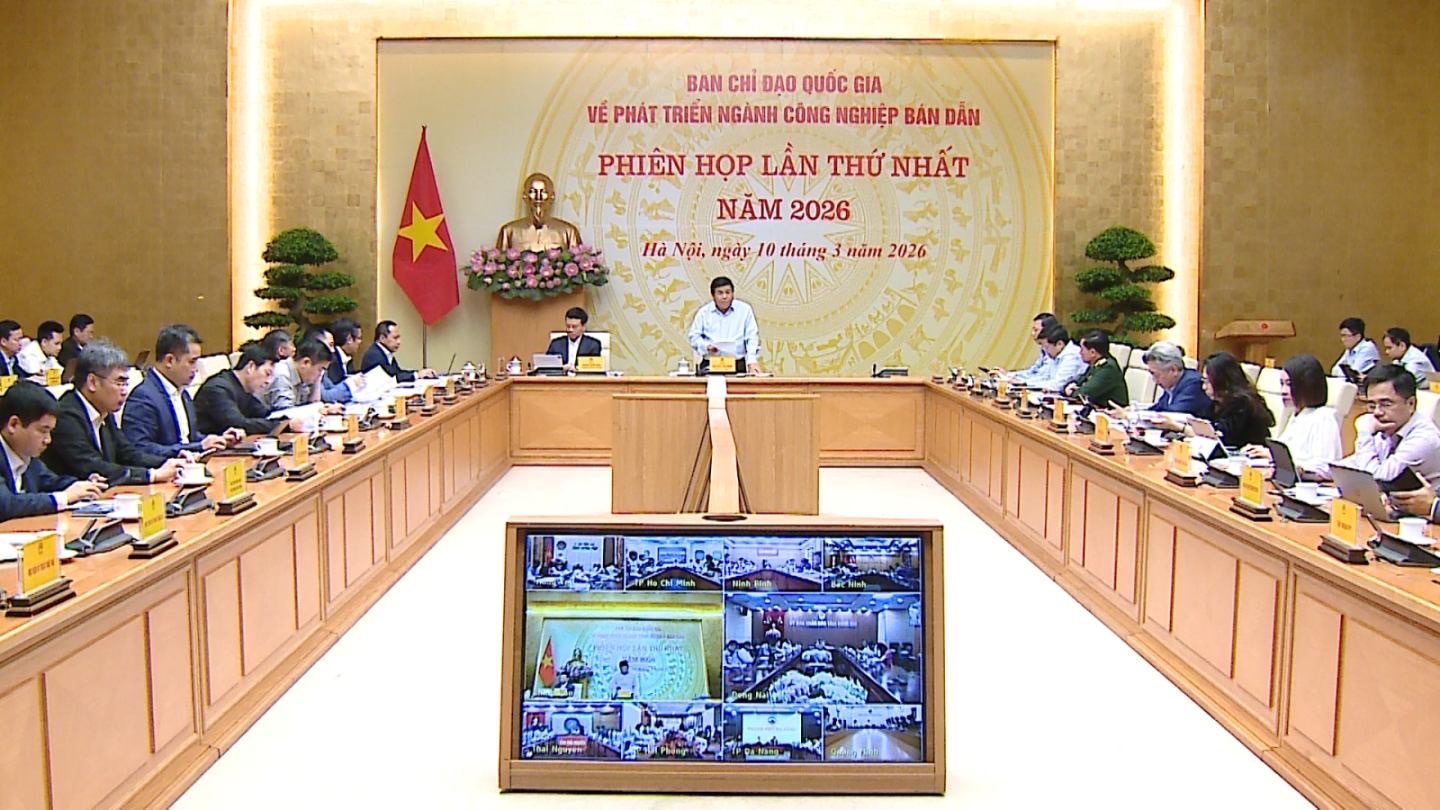
Photo caption: Deputy Prime Minister Nguyễn Chí Dũng chairs the first 2026 meeting of the National Steering Committee for Semiconductor Industry Development. Photo: VGP/Thu Sa.
In his opening remarks, Deputy Prime Minister Nguyễn Chí Dũng highlighted the strong growth and deep restructuring of the global semiconductor industry in both technology and supply chains. The rapid advancement of AI and emerging digital technologies continues to reinforce semiconductors as a foundational pillar of the global digital economy, particularly in AI, cloud computing, IoT, and big data. Many countries are accelerating supply chain diversification and strengthening strategic autonomy in this field.
While ministries and agencies have actively implemented policies and programs—such as the semiconductor industry development strategy and workforce development initiatives—and Vietnamese enterprises have gradually joined the global value chain, significant challenges remain. These include shortages of high-quality talent, limited R&D capacity, infrastructure gaps, policy constraints, and the relatively low participation of domestic firms in global supply chains.
During the session, the Steering Committee reviewed progress, discussed solutions to accelerate ecosystem development, and gathered input for the 2026 action plan. Representatives from localities, universities, and enterprises contributed proposals aligned with national objectives.
.jpg)
Photo caption: Mr.Trần Đăng Hòa, Chairman of FPT IS, emphasizes the importance of business alliances in developing Vietnam’s semiconductor ecosystem.
Representing FPT, Mr. Trần Đăng Hòa stressed:
“In a world undergoing profound geopolitical and economic shifts, strategic competition increasingly revolves around high-tech supply chains. From AI, cloud computing, 5G/6G, and electric vehicles to defense systems—all depend on a core foundation: semiconductors.”
From a business perspective, he noted that while Vietnam has introduced various incentive policies to encourage participation in the semiconductor sector, further clarification and implementation mechanisms are needed to ensure effectiveness. Examples include corporate income tax incentives, “green lane” mechanisms for semiconductor equipment imports, and clearer guidelines for certificates of origin (C/O), given the complexity of global semiconductor supply chains and the lack of precedent in defining “Made in Vietnam” value for chips.
On workforce development, FPT proposed a three-tier strategy: rapid upskilling of engineers from related fields, attracting international experts and overseas Vietnamese through preferential policies, and strengthening hands-on training in collaboration with enterprises. The company also recommended establishing a national Chip-Lab under a “Shared Resources” model—an R&D infrastructure hub operated jointly by major technology corporations and government agencies to support the entire ecosystem.
Mr. Trần Đăng Hòa affirmed: “With strong policy direction from the Government, enterprises like FPT are ready and committed to fostering alliances within the domestic semiconductor ecosystem, advancing chip R&D, and helping Vietnam move deeper into the global value chain.”
FPT has been involved in the semiconductor industry for over 11 years, gradually building a comprehensive ecosystem spanning chip design, packaging, testing, and workforce training. In IC design, the company focuses on Power ICs and PMICs—critical components in electronic devices and systems.
.jpg)
Photo caption: FPT exported its first “Make in Vietnam” power chip batch to Japan in December 2025.
By the end of 2025, FPT successfully exported its first commercial batch of power chips to Japan. Entering a market known for stringent technical standards and green supply chain requirements underscores the company’s design capabilities. In 2026, FPT plans to expand commercialization of “Make in Vietnam, Made by FPT” chips in markets such as Japan, South Korea, Taiwan, and China, while also offering turnkey chip design services—from design and fabrication to packaging, testing, and delivery.
Building on its expertise in power chips, FPT is developing core design capabilities to expand into AI-enabled system-on-chip (SoC) solutions for edge applications. These chips are optimized for use cases such as smart agriculture, healthcare, unmanned devices, UAVs, and drones, forming the foundation for the company’s “Bonsai AI” ecosystem—specialized AI solutions tailored to specific industries.
In January 2026, FPT announced the establishment of an advanced semiconductor testing and packaging factory—the first of its kind in Vietnam fully operated by Vietnamese engineers—contributing to a complete ecosystem from R&D and design to manufacturing and commercialization.
.jpg)
Photo caption: FPT collaborates comprehensively with Viettel to build autonomous semiconductor capabilities.
To address the critical challenge of talent shortages, FPT aims to train 10,000 semiconductor engineers by 2030 through a multi-tiered education system. This includes university programs in IC design, international college-level semiconductor programs in partnership with BTEC, and globally recognized certification tracks. Additionally, a “2+2” international model allows students to study two years in Vietnam and two years in Taiwan or South Korea before interning at leading semiconductor companies.

Highlight news
FPT News | 03/07/2025