FPT Chairman Truong Gia Binh: FPT shifts from pure growth to long-term investment in core technologies
•
25/12/2025
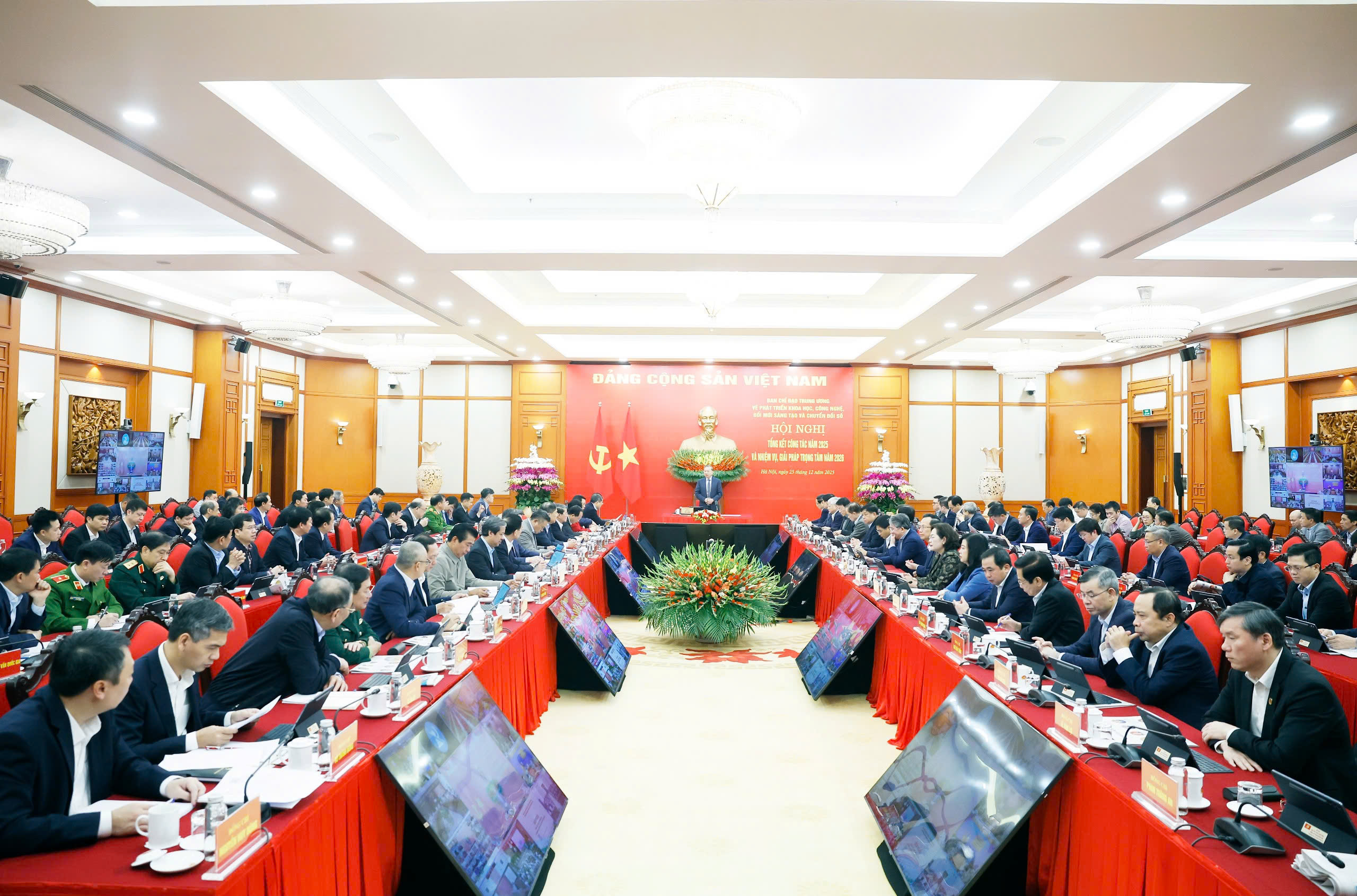
At the 2025 Review Conference and Orientation for Key Tasks in 2026 of the Central Steering Committee for the implementation of Resolution No. 57-NQ/TW, Mr. Truong Gia Binh, Chairman of the Board of Directors of FPT Corporation, affirmed that Resolution No. 57-NQ/TW has created strong consensus and determination within Vietnam’s technology business community, while opening strategic space for enterprises to participate more deeply in the development of science, technology, innovation and national digital transformation.
The Conference was organized by the Central Steering Committee for Science, Technology, Innovation and Digital Transformation, chaired by Party General Secretary To Lam, Head of the Central Steering Committee, at the Hanoi site.
Core technologies become a strategic national capability
According to Mr. Truong Gia Binh, amid growing global volatility, technology plays an increasingly critical role not only in economic development but also in national sovereignty, security and strategic autonomy. In alignment with Resolution No. 57-NQ/TW, FPT has made a strategic decision to shift its focus from pure growth to long-term investment in core technologies, considering this the foundation for sustainable corporate development and a practical contribution to the country.
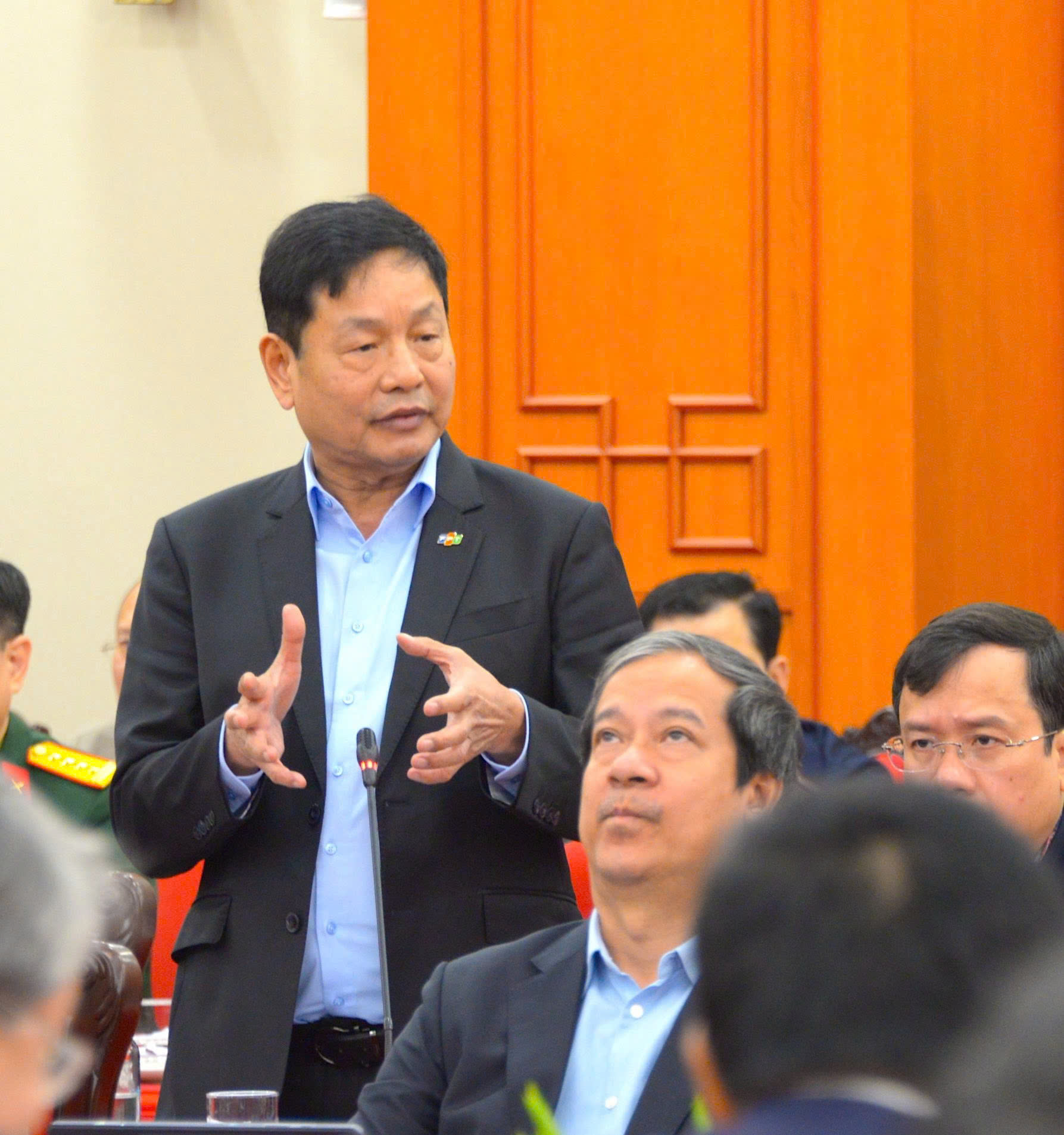
FPT currently employs approximately 85,000 staff and engineers across more than 30 countries, and is focusing its investments on strategic technology areas such as artificial intelligence, cybersecurity, quantum technology, data and digital infrastructure, progressively mastering high value-added technologies.
Reporting at the Conference, Mr. Truong Gia Binh said that FPT is transforming FPT University from a practice-oriented institution into a research and development university, strengthening the integration of education and scientific research, where students learn alongside AI researchers. Students are involved in technology research from their first year; currently, FPT University students publish around 270 scientific papers each year in prestigious international journals.
Notably, on December 3, FPT established the Quantum AI & Cyber Security Institute (QACI) and committed an investment of USD 100 million, with the goals by 2035 to:
• train 100 PhDs,
• develop 2,000 technology experts, and
• produce 500 scientific publications, patents and intellectual property assets.
FPT is shifting from a model of “doing alone” to “doing together.” Mr. Truong Gia Binh shared a new cooperation model based on three principles: shared goals – joint action – shared responsibility. Accordingly, FPT has cooperated effectively with Da Nang in cleaning land data; worked with Quang Ninh to bring Resolution No. 57-NQ/TW down to the commune level and support practical, synchronized digital transformation; and proposed the concept of “data is born to be used,” implementing dozens of open, interoperable and shared data programs.
FPT is also a founding participant in the Au Lac AI Alliance, developing a Vietnamese large language model with 70 billion parameters trained on 112 billion tokens, currently serving around 5 million regular users. In the semiconductor sector, “Make in Vietnam” chips co-designed and tested by FPT have been exported to Japan and South Korea.
Four key proposals from FPT
At the Conference, Mr. Truong Gia Binh put forward four major proposals to accelerate the implementation of Resolution No. 57-NQ/TW in the coming period:
First, to accelerate the development of digital government technology platforms, positioning AI as a foundational technology for national governance, security and defense, and digital economic development.
Second, to establish a National Cybersecurity Defense Alliance, connecting “Make in Vietnam” cybersecurity products and investing in highly sophisticated systems to protect national digital infrastructure and ensure cybersecurity.
Third, for the State to support a “public–private co-creation” model, with pilot mechanisms and breakthrough investments in emerging technology areas — particularly the low-altitude economy, semiconductors and railway infrastructure — enabling domestic enterprises to master the operation, control and protection of critical infrastructure systems.
Finally, regarding railway infrastructure, Mr. Truong Gia Binh emphasized that mastering operation, control and protection technologies is vital. With its experience in technology mastery and system operation, FPT wishes to participate more deeply alongside ministries, sectors and local authorities in developing railway infrastructure, contributing to the country’s long-term development.
Reaffirming its commitment to accompany the Party and the State, Mr. Truong Gia Binh emphasized that FPT will continue to mobilize resources to invest in core technologies, contribute to the effective implementation of Resolution No. 57-NQ/TW, and help build an autonomous, modern and globally integrated Vietnamese science and technology ecosystem.