Germany’s Leading Nanoelectronics and Microsystems Research Institute Explores Quantum and Semiconductor Collaboration Opportunities with FPT in Vietnam
•
03/06/2026
Hanoi, June 2, 2026 – FPT welcomed a delegation from Fraunhofer ENAS, a member institute of Germany’s Fraunhofer Society specializing in microelectronics, microsystems, smart sensors, and nanotechnology, to discuss potential collaboration in semiconductors, deep technology, and talent development.
The delegation from Fraunhofer ENAS and the German state of Saxony included Prof. Dr. Harald Kuhn, Director of Fraunhofer ENAS; Dr. h.c. Thomas Schmidt, Member of the Saxony State Parliament, former Minister of Saxony, and Head of the German Delegation to the European Committee of the Regions; Dr. Thomas Aulig, Vice President of the Vietnamese-German University; Mr. Pham Huu Tien, Fraunhofer ENAS Program Coordinator in Hanoi; and Mr. Ho Hieu Trung Nguyen, Research Manager of Fraunhofer ENAS in Vietnam.
Representing FPT were Dr. Le Anh Ngoc, Deputy Director of the Quantum AI & Cyber Security Institute (QACI); Mr. Nguyen Vinh Quang, Chief Executive Officer of FPT Semiconductor; Dr. Vu Chi Thanh, President of FPT Polytechnic College; along with representatives from FPT’s technology, research, and education divisions.
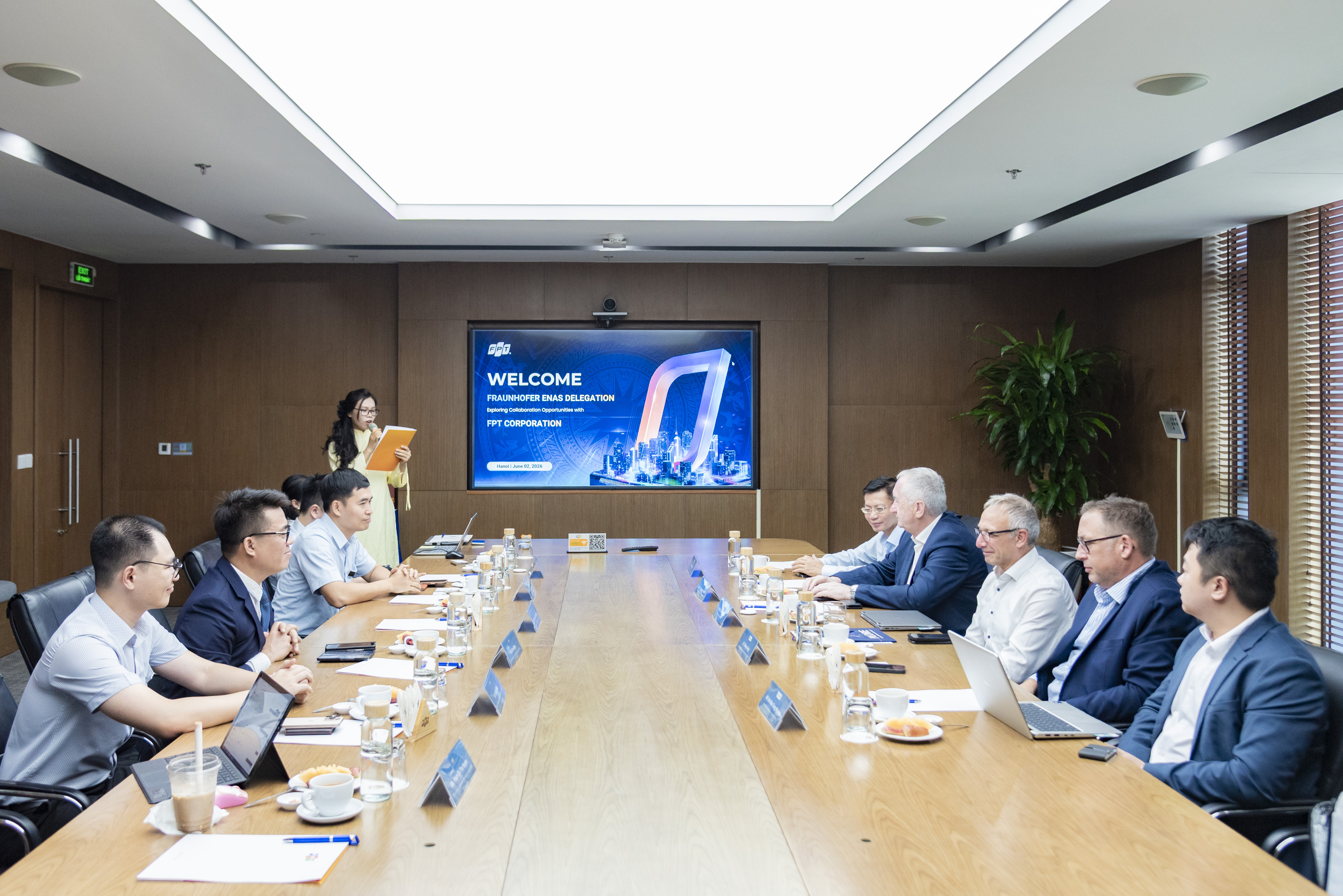
Overview of the working session.
One of the key topics discussed was how Germany’s applied research capabilities could be connected with Vietnam’s emerging technology ecosystem, particularly in semiconductors, artificial intelligence, cybersecurity, and workforce development.
During the meeting, Prof. Dr. Harald Kuhn, Director of Fraunhofer ENAS, highlighted that Saxony is currently one of Europe’s leading semiconductor hubs, home to numerous technology companies, research institutes, and universities.
According to him, semiconductors are not merely an industry in their own right but also serve as the foundation for quantum technologies, healthcare, automotive innovation, and next-generation industrial applications. “Our clear objective is to build a mutually beneficial partnership, allowing both sides to view this as the beginning of a long-term relationship,” said Prof. Dr. Harald Kuhn.
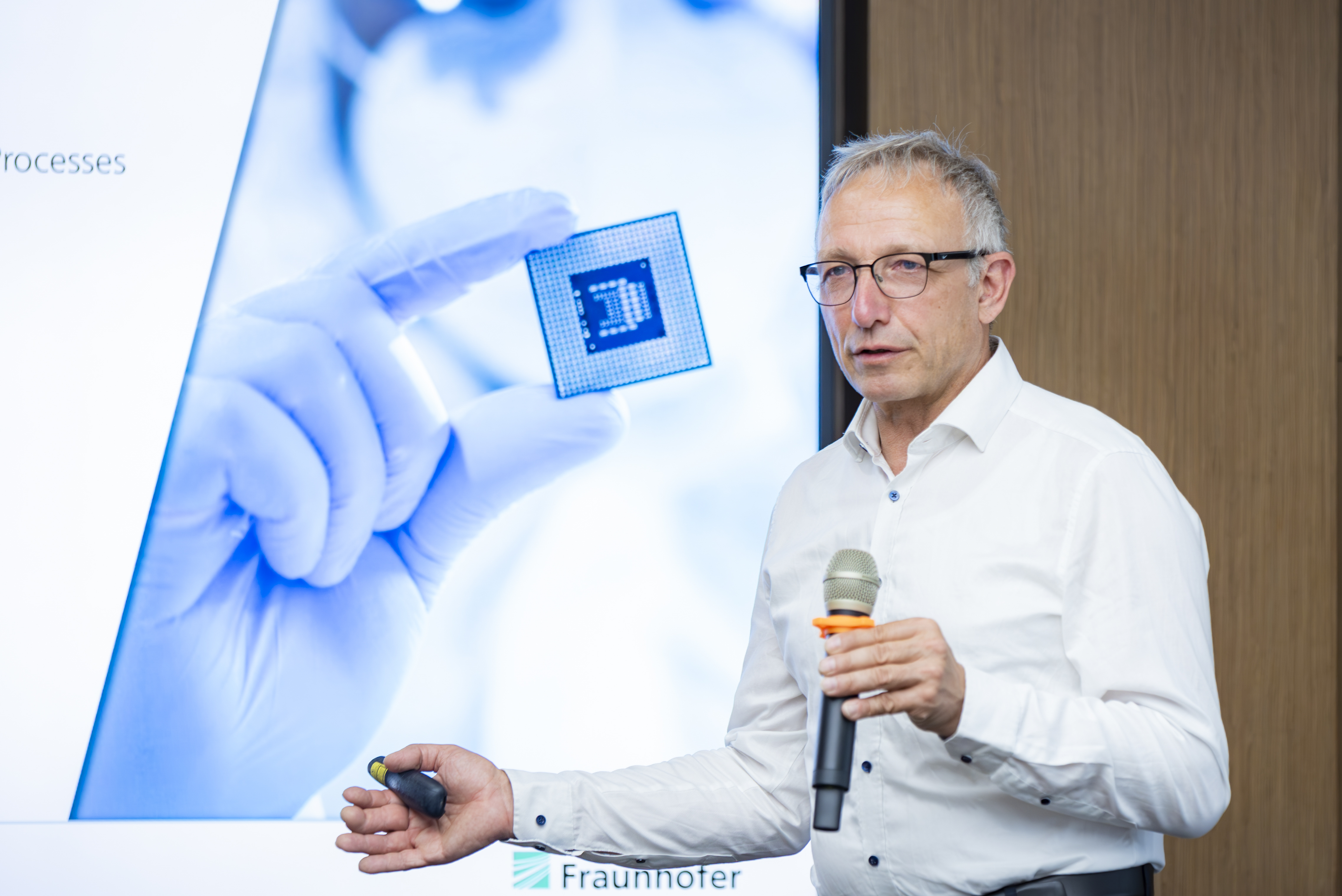
Prof. Dr. Harald Kuhn speaking at the event.
The German delegation expressed interest in Vietnam’s semiconductor and integrated circuit development strategy, FPT’s core technology capabilities, and opportunities for collaboration in research and development, talent training, industrial applications, and future investment initiatives.
During the session, FPT introduced three core capability areas that could complement high-tech collaboration efforts.
Among them, QACI-FPT, established on December 13, 2025, focuses on three key pillars: scientific research, talent development, and academic collaboration in artificial intelligence, quantum technology, and cybersecurity. “We aim to build strong research groups, nurture young technology talents, and expand partnerships with leading universities and research institutes both domestically and internationally. Doctoral programs, international seminars, and collaborative R&D initiatives are all part of how FPT fosters a long-term research culture,” said Dr. Le Anh Ngoc.
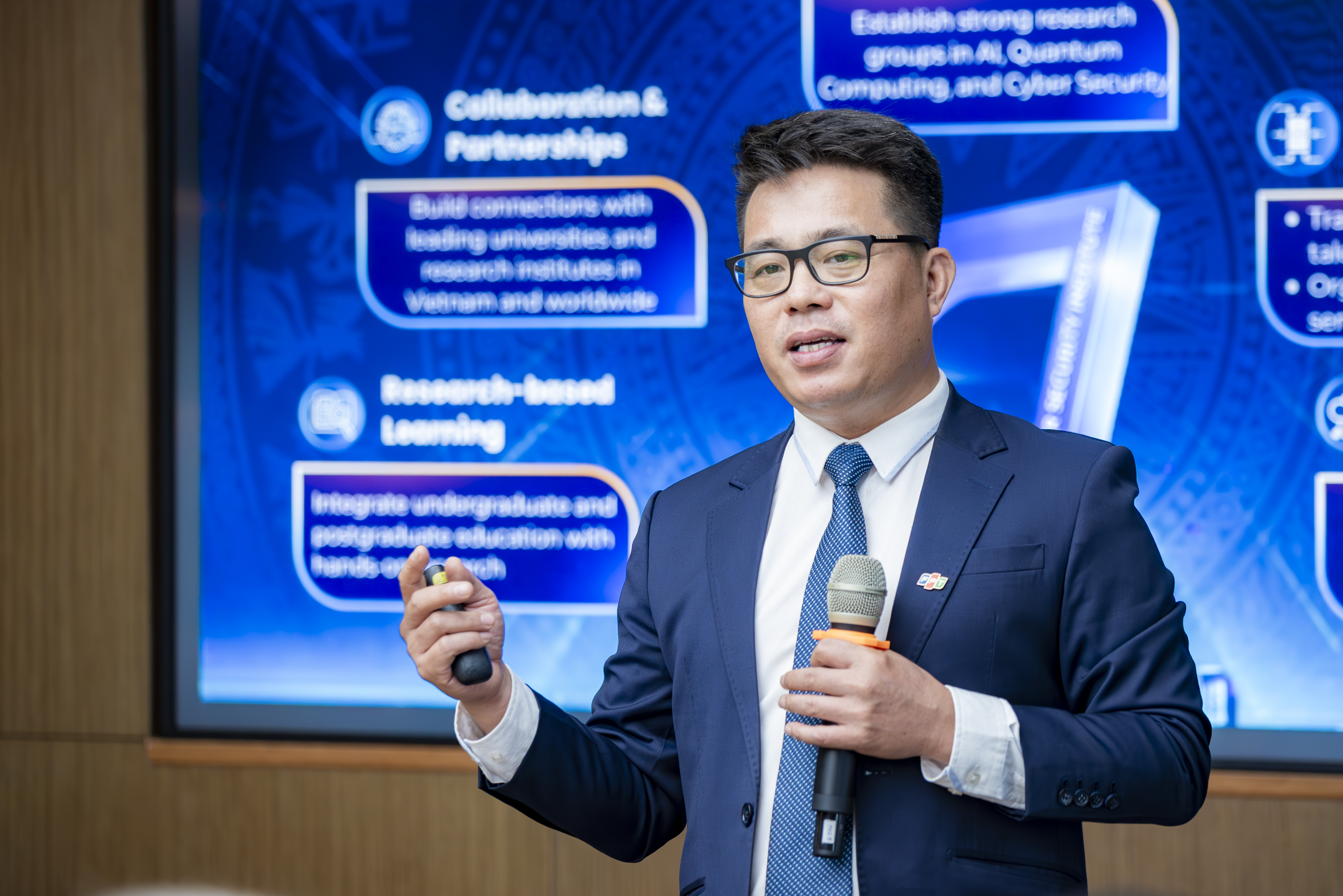
Dr. Le Anh Ngoc, Deputy Director of FPT’s Quantum AI & Cyber Security Institute (QACI).
In the semiconductor sector, FPT Semiconductor introduced its development directions, including IC design, analog IP, PMICs, power ICs, engineering services, ATE testing, and advanced packaging technologies.
Founded in 2022, FPT Semiconductor launched the Vietnam Semiconductor Innovation Center at the National Innovation Center (NIC) in 2024 and established FPT Analysis Technologies in 2025.
FPT began investing in chip design as early as 2014 before officially establishing FPT Semiconductor Joint Stock Company in 2022 and FPT Analysis Technologies Joint Stock Company thereafter. The Group focuses on strengthening capabilities in two critical stages of the semiconductor value chain.
The first is IC design, where FPT leverages its engineering talent and R&D capabilities to develop new product lines that can scale to meet global market demand.
The second is Assembly, Test, and Packaging (ATP), with a particular focus on advanced packaging technologies and semiconductor testing.
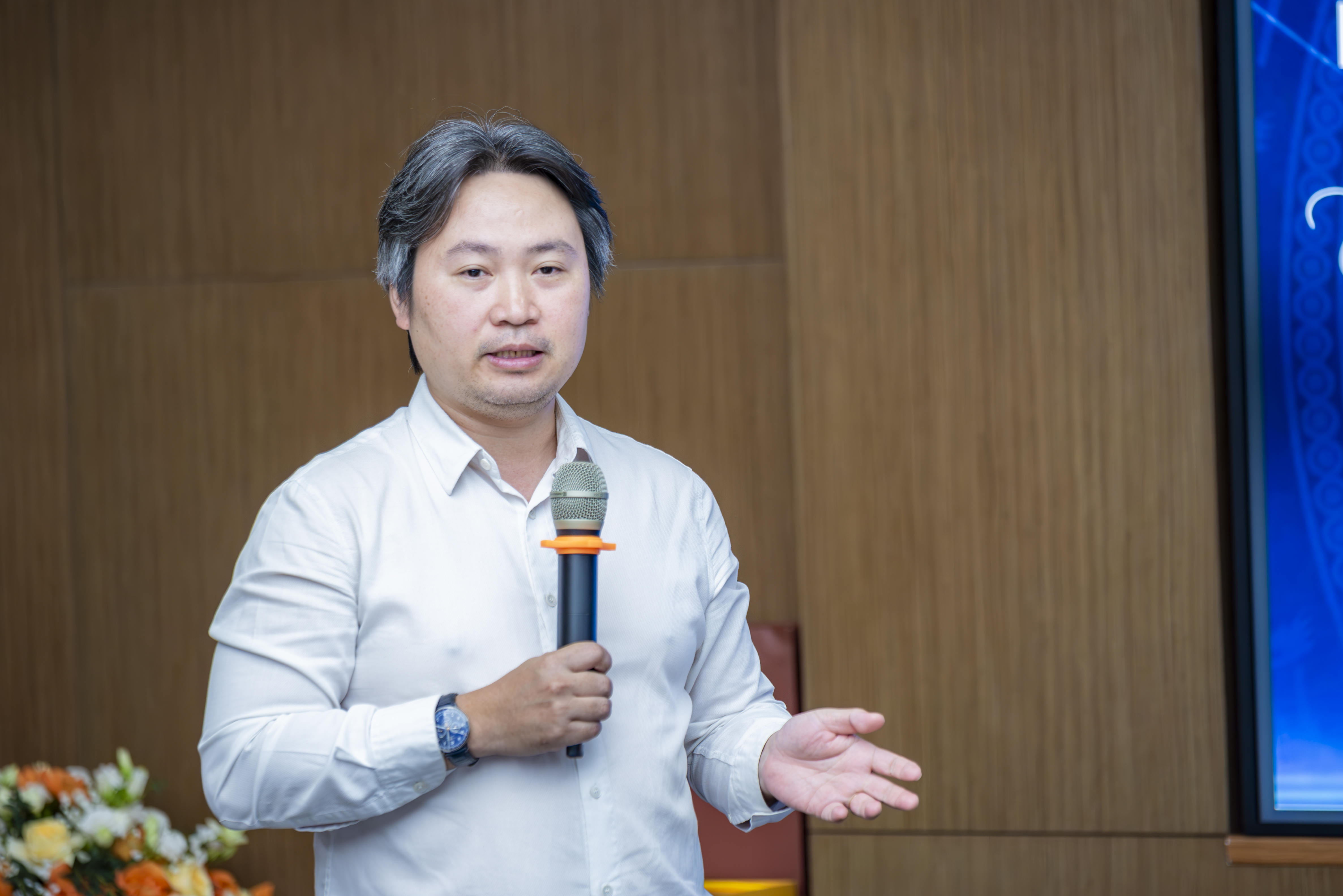
Mr. Nguyen Vinh Quang, Chief Executive Officer of FPT Semiconductor, sharing insights during the discussion.
According to FPT Semiconductor representatives, potential collaboration areas include advanced testing and packaging services, particularly reliability testing for semiconductor components serving German and European partners, as well as power semiconductor applications, silicon carbide (SiC) technologies, and industrial solutions targeting markets in Germany, Europe, and Vietnam.
Talent development was another major topic of discussion.
Dr. Vu Chi Thanh, President of FPT Polytechnic College, shared that the institution currently operates 31 campuses across 18 provinces and cities under a hands-on, project-based learning model. Academic programs are updated every two years based on industry feedback, supported by a network of more than 2,000 corporate partners and a graduate employment rate of nearly 98%.
Representatives from the Vietnamese-German University noted that Vietnam and Germany share significant opportunities for collaboration in vocational education, engineering training, and lifelong learning. Germany’s model emphasizes a seamless education system that enables learners to continuously upgrade their skills beyond initial training.
The two sides also held preliminary discussions on establishing R&D centers or laboratories in Vietnam, collaborating on doctoral training programs, organizing internship opportunities, developing high-tech talent, and launching joint research projects.
The interest shown by Fraunhofer ENAS and representatives from Saxony in exploring FPT’s technology ecosystem reflects a growing demand to connect Europe’s applied research strengths with Vietnam’s expanding technology workforce and market.
As the semiconductor industry increasingly requires not only capital investment but also expertise in research, testing, packaging, and technical talent development, discussions such as these may open new pathways for Vietnam to deepen its participation in the global high-tech value chain.