
FPT’s Quantum AI & Cyber Security Institute Partners with Leading Universities to Develop Strategic Technology Talent
•
21/05/2026
Recently, the Quantum AI & Cyber Security Institute (QACI) under FPT has expanded partnerships with a number of Vietnam’s leading universities and technology academies to develop high-quality talent and strengthen research capabilities in strategic technology fields such as artificial intelligence (AI), quantum technology, and cybersecurity.
Over the past period, QACI has established collaborations with five leading universities and technology institutions nationwide, including:
-
University of Engineering and Technology – Vietnam National University, Hanoi
-
Posts and Telecommunications Institute of Technology (PTIT)
-
School of Information and Communications Technology – Hanoi University of Science and Technology
-
University of Information Technology – Vietnam National University Ho Chi Minh City
-
FPT University
These partnerships aim to build a long-term collaborative network among enterprises, research institutes, and universities. Through these initiatives, the parties will jointly participate in talent development, applied research, and gradually integrate real-world technological challenges from industry into academic research and education.
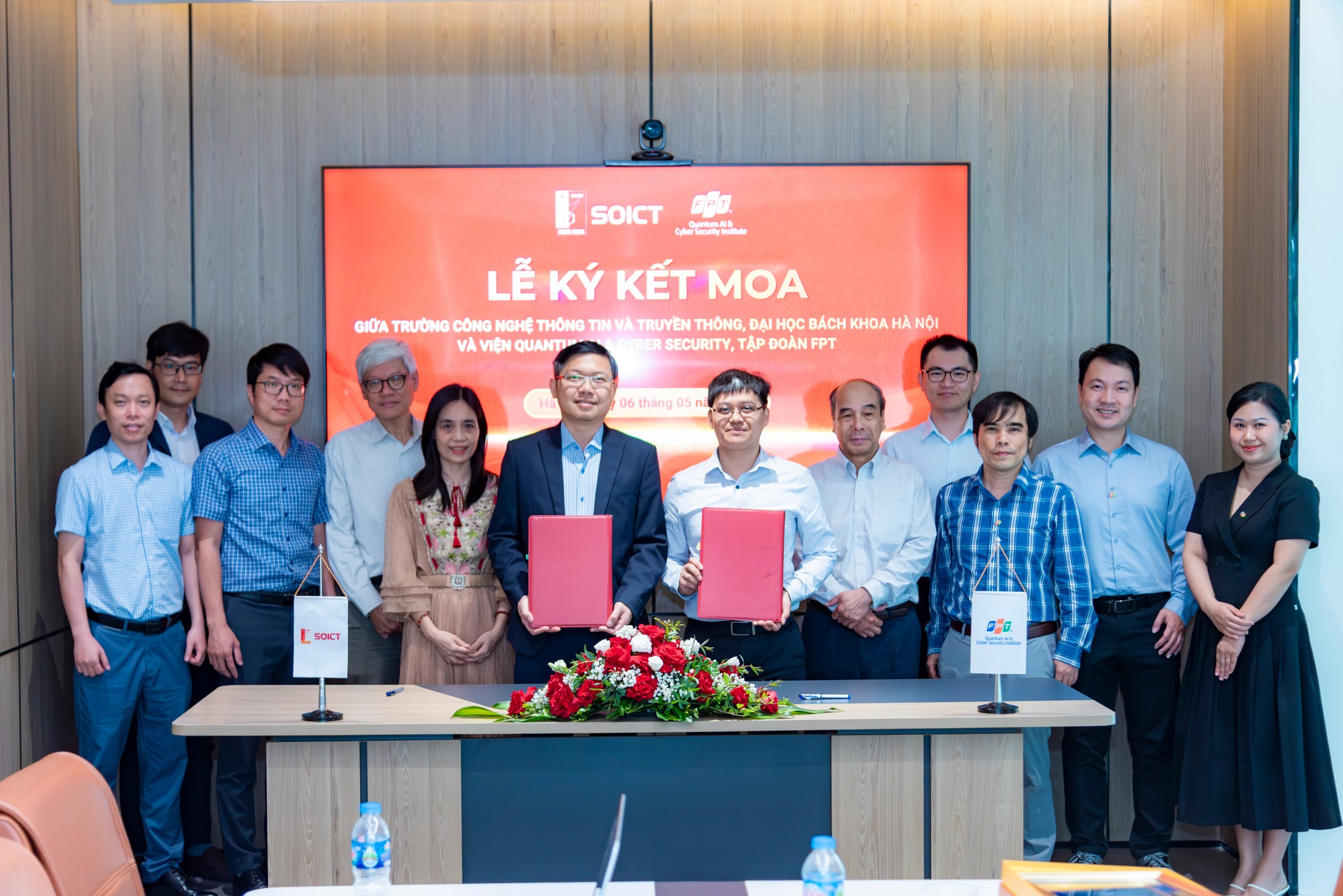
Signing ceremony of the Memorandum of Agreement (MOA) between the School of Information and Communications Technology – Hanoi University of Science and Technology and QACI
These initiatives come as Vietnam accelerates the development of strategic technologies under Decision No. 21/2026/QĐ-TTg issued by the Prime Minister, covering artificial intelligence, quantum technology, cybersecurity, and other core technology domains.
These fields require talent with deep research foundations, strong problem-solving capabilities, and the ability to transform knowledge into practical products and solutions.
In Vietnam, however, the gap between research and commercialization remains a significant challenge. According to information published by the Ministry of Science and Technology, the commercialization rate of inventions in Vietnam currently stands at approximately 0.1%, significantly lower than the global average of 5% and the 10% average among developed countries.
Vietnam ranks 37th globally in innovation output, yet only 112th in intellectual property income, indicating that many research outcomes have not been effectively converted into economic value and revenue.
Against this backdrop, the collaborative model connecting research institutes, universities, and businesses is expected to help shorten the path from laboratory research to practical application.
Through co-research programs, postgraduate training, doctoral supervision, R&D internships, academic seminars, summer research schools, and laboratory collaboration initiatives, students, graduate learners, and doctoral researchers will gain greater opportunities to engage in research environments closely connected to real-world challenges.
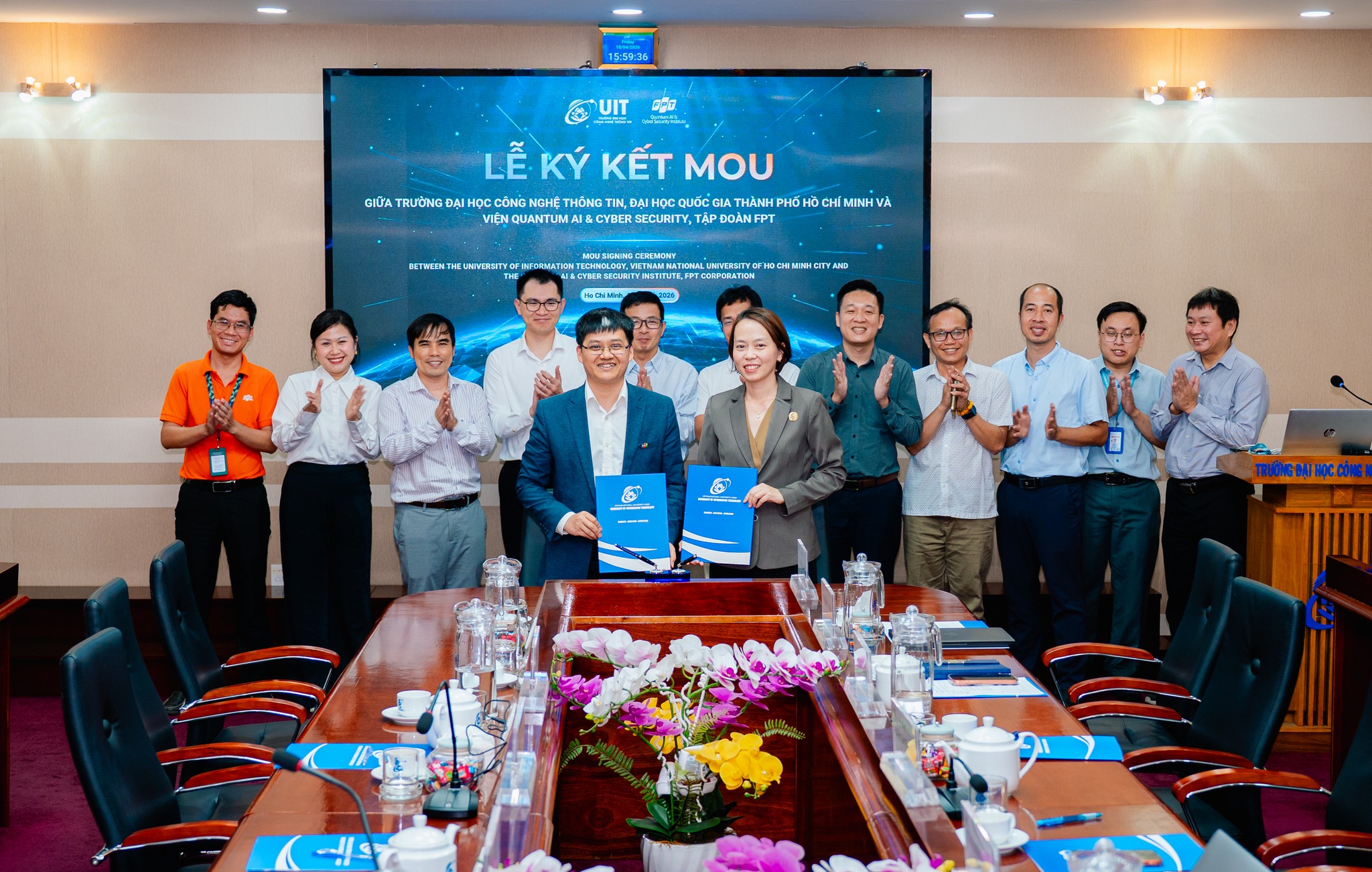
Signing ceremony of the Memorandum of Understanding (MoU) between the University of Information Technology – Vietnam National University Ho Chi Minh City and QACI
According to the cooperation framework, QACI and partner universities will jointly implement a range of professional activities, including co-research programs, postgraduate education, doctoral supervision, academic seminars, research summer schools, R&D internship programs, and initiatives for developing young technology talent.
These activities are expected to provide students, master’s candidates, and doctoral researchers with opportunities to access practical research environments and collaborate directly with industry experts and university faculty members.
At the same time, laboratories, training resources, and expert networks from all participating organizations will be interconnected to enhance capabilities for conducting advanced research programs.
Associate Professor Dr. Ngo Xuan Bach, Director of QACI, shared: "QACI aims to build a strong collaborative network among research institutes, universities, and enterprises to jointly develop high-quality technology talent, promote applied research, and gradually master Vietnam’s strategic technologies."
According to him, collaboration with universities is a crucial pathway for cultivating technology talent at greater depth.
In emerging fields such as AI, quantum technology, and cybersecurity, talent cannot be developed solely through short-term training programs. Instead, it requires a continuous environment that integrates learning, research, experimentation, and solving real-world challenges.
Associate Professor Dr. Ngo Xuan Bach, Director of the Quantum AI & Cyber Security Institute
QACI has set ambitious long-term goals, including:
-
Training 100 PhD holders
-
Developing and upskilling 2,000 technology experts
-
Publishing 500 research papers, patents, and intellectual property assets
These objectives aim to build a strong pool of researchers and technology specialists capable of addressing major challenges in AI, quantum technologies, and cybersecurity.
In the coming years, QACI plans to continue expanding its partner network and investing in advanced research and education programs, with the goal of becoming a leading center for research and innovation in AI, quantum technology, and cybersecurity in Vietnam.

Highlight news
FPT News | 03/07/2025