FPT CEO: Vietnam Can Become a Hub for Co-Creation, Innovation, and Technology Solution Exports
•
25/06/2026
Hanoi, June 25, 2026 – Speaking at the Hanoi Strategic Dialogue under the theme "New Growth Model: Leveraging Strategic Technologies to Enhance Competitiveness and Sustainable Growth", jointly organized by Vietnam's Ministry of Foreign Affairs and Columbia University, Mr. Nguyen Van Khoa, Chief Executive Officer of FPT Corporation, said Vietnam has a unique opportunity to elevate its position in the global technology value chain. According to him, the priority is no longer to formulate additional strategies, but to rapidly translate existing strategic directions into tangible products, markets, and productivity gains.
Mr. Nguyen Van Khoa participated in the panel discussion "From Strategy to Execution: Building Partnerships in Strategic Technology Sectors" alongside Mr. Vo Xuan Hoai, Deputy Director of the National Innovation Center (NIC); Mr. Le Hong Minh, Chairman of VNG Corporation; Mr. Luong Viet Quoc, Chief Executive Officer of Realtime Robotics; Mr. Nguyen Manh Tuong, Chief Technology Officer of MoMo; Mr. Martin Wermelinger, Deputy Head of Investment at the OECD; with Professor Merit Janow, former Dean of Columbia University's School of International and Public Affairs (SIPA), serving as moderator.
According to Mr. Nguyen Van Khoa, Vietnam has the potential over the next five years to evolve from a manufacturing and IT services hub into a center for co-creation, collaborative innovation, and the export of technology solutions, particularly in artificial intelligence (AI), generative AI (GenAI), and other frontier technologies. He noted that Vietnam has already established an important policy foundation through Resolution No. 57, Resolution No. 68, and the national list of prioritized strategic technologies. The challenge now is no longer developing additional strategies, but transforming these strategies into concrete actions, products, markets, and measurable productivity.
.jpg)
Panel discussion: "From Strategy to Execution: Building Partnerships in Strategic Technology Sectors."
Building National Technology Alliances
To seize this opportunity, Mr. Nguyen Van Khoa proposed that the Government invest in shared infrastructure for Vietnam's innovation ecosystem, including AI computing capacity, high-quality data, cloud computing platforms, and cybersecurity capabilities. These shared technology laboratories should be designed with clear commercialization objectives, enabling enterprises, universities, and research institutes to jointly conduct research and development (R&D).
"Vietnam needs national technology alliances and capable technology corporations that can take responsibility for solving the country's major challenges through government-commissioned programs," Mr. Nguyen Van Khoa said.
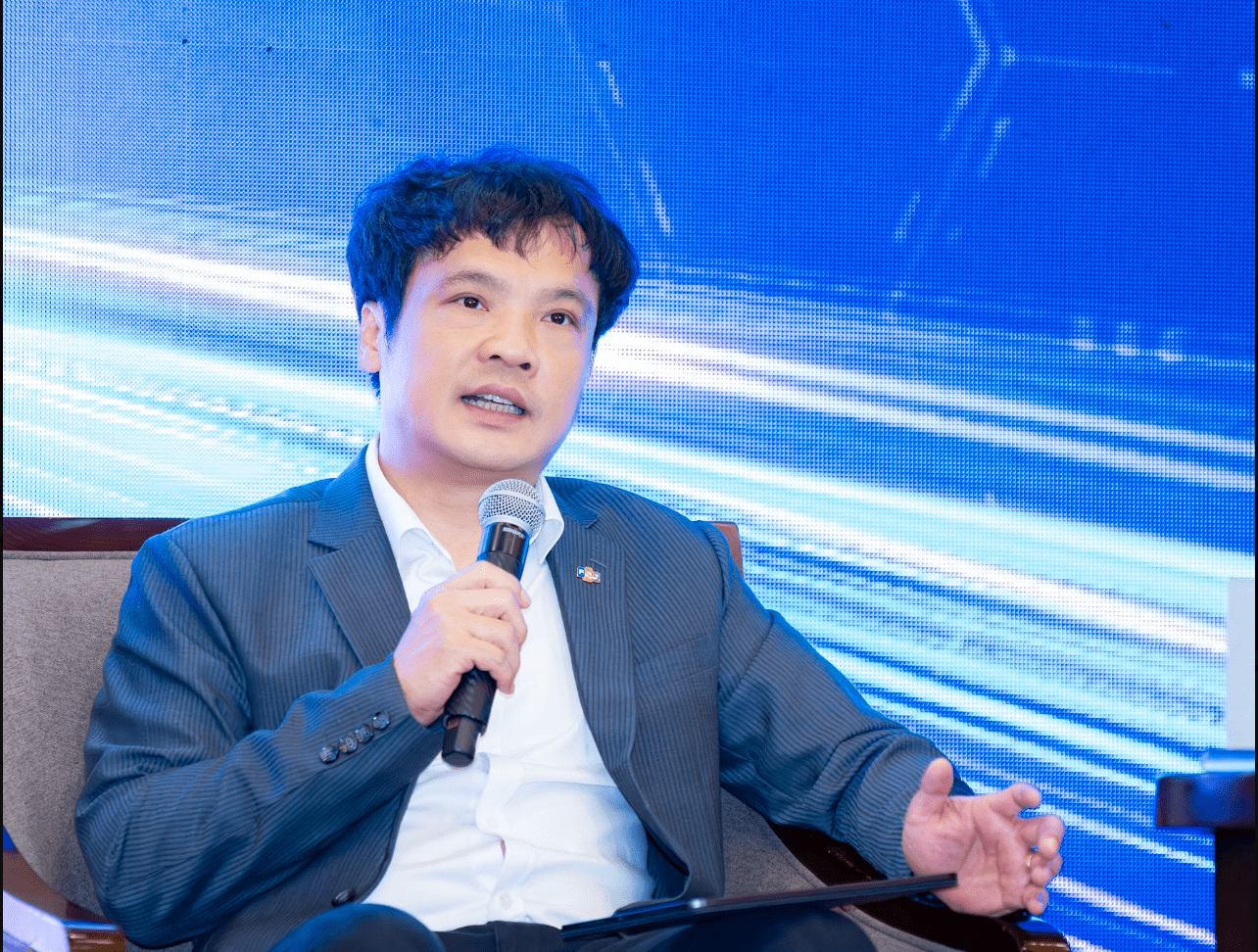
Mr. Nguyen Van Khoa, CEO of FPT Corporation, speaks at the forum.
He further suggested that every strategic technology program should have a clearly designated lead government agency, a core enterprise, participation from universities, research institutes, and international partners, together with defined objectives, budgets, timelines, and measurable outcomes.
According to the FPT CEO, creating a viable market for innovative technology products is essential to building globally competitive technology companies. Without early adopters and customers willing to deploy new technologies, it will be difficult for innovative enterprises to scale successfully.
He therefore proposed that the Government and major corporations act as first customers for emerging technologies, expand outcome-based public procurement instead of project-based procurement, and develop centralized regulatory sandbox models. Vietnam, he argued, should move away from numerous small pilot projects and instead prioritize large-scale solutions with national deployment potential.
Investing in Shared Infrastructure and Expanding International Collaboration
Mr. Nguyen Van Khoa also emphasized the importance of investing in shared innovation infrastructure, including high-quality data, AI computing resources, cloud platforms, telecommunications infrastructure, and cybersecurity solutions.
He noted that technology laboratories funded by the Government should be more closely aligned with applied research, commercialization, and market demand to maximize their effectiveness. Robust digital infrastructure and trusted data will provide the foundation for Vietnamese technology products to compete internationally.
In addition, he called for stronger partnerships with global technology companies and foreign-invested enterprises (FDI), focusing on joint research, product development, talent development, and domestic supply chain expansion. Vietnamese enterprises, he said, should participate more deeply in technology ecosystems rather than remaining concentrated in lower-value segments of the value chain.
Drawing on FPT's experience delivering digital transformation projects worldwide, Mr. Nguyen Van Khoa observed that the biggest barriers are no longer hardware or software investments, but data readiness, operational processes, workforce capabilities, and leadership commitment.
Vietnam Should Become the Fastest Adopter of AI
Concluding the discussion, Mr. Nguyen Van Khoa stated that Vietnam does not necessarily need to become the world's largest technology spender or develop the world's largest AI models. Instead, Vietnam's competitive advantage should lie in its ability to build effective international partnerships, make decisions quickly, and deploy technologies at scale with exceptional speed.
"Vietnam should become the country that adopts AI and emerging technology platforms the fastest, creates value for the economy the quickest, and then transforms those capabilities into technology products for global markets," Mr. Nguyen Van Khoa said.
Participants at the forum broadly agreed that science, technology, and innovation will serve as Vietnam's primary growth engines in the years ahead.
.jpg)
Minister of Science and Technology Vu Hai Quan delivers remarks at the forum.
In his keynote address, Minister of Science and Technology Vu Hai Quan emphasized that Vietnam must build a knowledge-based growth model in which science, technology, and innovation become the principal drivers of development. He stressed the need for Vietnam to move from technology adoption to technology mastery, and from labor-cost-driven growth to growth powered by talent and innovation, while continuing to strengthen institutional frameworks and collaboration among government, businesses, and research institutions.
.jpg)
Deputy Minister of Foreign Affairs Dang Hoang Giang speaks at the event.
Deputy Minister of Foreign Affairs Dang Hoang Giang noted that a country's ability to access, master, apply, and commercialize strategic technologies will increasingly determine its position within global value chains. He emphasized that Vietnam has already introduced important policies supporting science, technology, and innovation, and that the priority now is converting these strategic directions into tangible products, stronger competitiveness, and measurable outcomes.