FPT Ready to Accompany Ho Chi Minh City in Advancing the Low-Altitude Economy
•
08/01/2026
Ho Chi Minh City, January 8, 2026 – FPT reaffirmed the commitment to accompany Ho Chi Minh City on the journey to accelerate the development of the low-altitude economy (LAE), contributing to the city’s ambition to become a leading hub for low-altitude economic zones, with universities playing a core and central role, according to FPT’s Chief Technology Officer.
The statement was made at the Conference of University Rectors in Ho Chi Minh City held at Ton Duc Thang University under the theme “Strengthening the role of university councils in the Ho Chi Minh City mega-urban region: Connectivity – Integration – Innovation.”
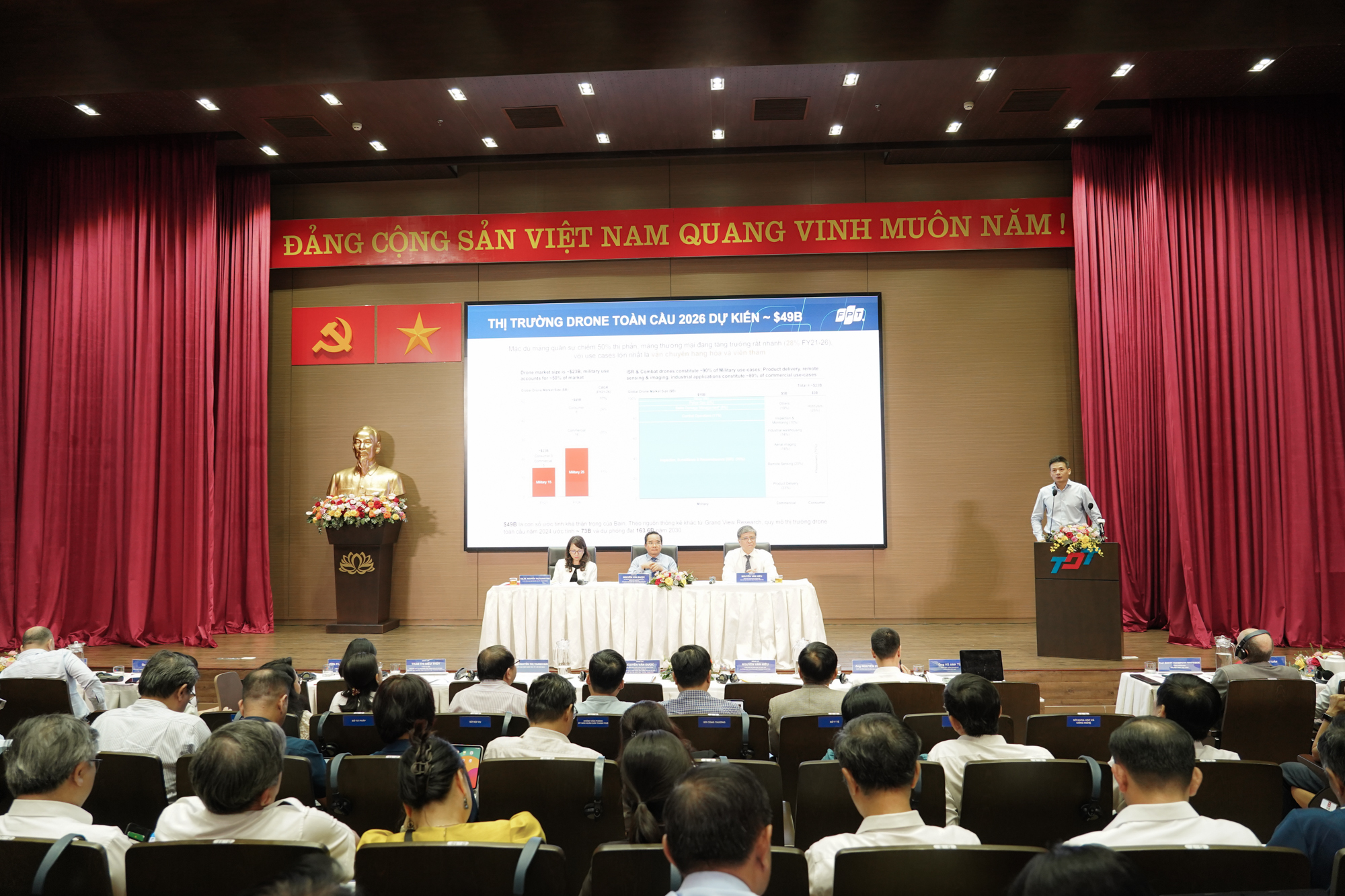
The conference was chaired by Mr. Nguyen Van Duoc, Member of the Party Central Committee, Deputy Secretary of the Ho Chi Minh City Party Committee, Chairman of the Ho Chi Minh City People’s Committee and Chairman of the Council. The event was attended by representatives of municipal departments, enterprises and presidents of universities across the city.
At the conference, the Ho Chi Minh City Department of Science and Technology presented key orientations of Resolution No. 57-NQ/TW and the venture capital framework for science and technology, while universities and enterprises contributed policy recommendations and thematic presentations. Discussions focused on four major areas: high-quality human resource development strategies; development of a carbon credit exchange; building innovation ecosystems; and identifying new economic sectors to implement Resolution 57 in practice.
Representing FPT, Mr. Vu Anh Tu — Chief Technology Officer of FPT and Director of FPT UAV — presented on the role of the low-altitude economy as a new growth engine, particularly for Ho Chi Minh City.
According to Mr. Tu, the global drone market is expected to reach approximately USD 49 billion by 2026, based on conservative estimates by Bain. Other sources such as Grand View Research estimate the global drone market at USD 73 billion in 2024, projected to grow to USD 163.6 billion by 2033. Military applications continue to account for a significant share, while logistics and remote sensing are emerging as major commercial use cases.
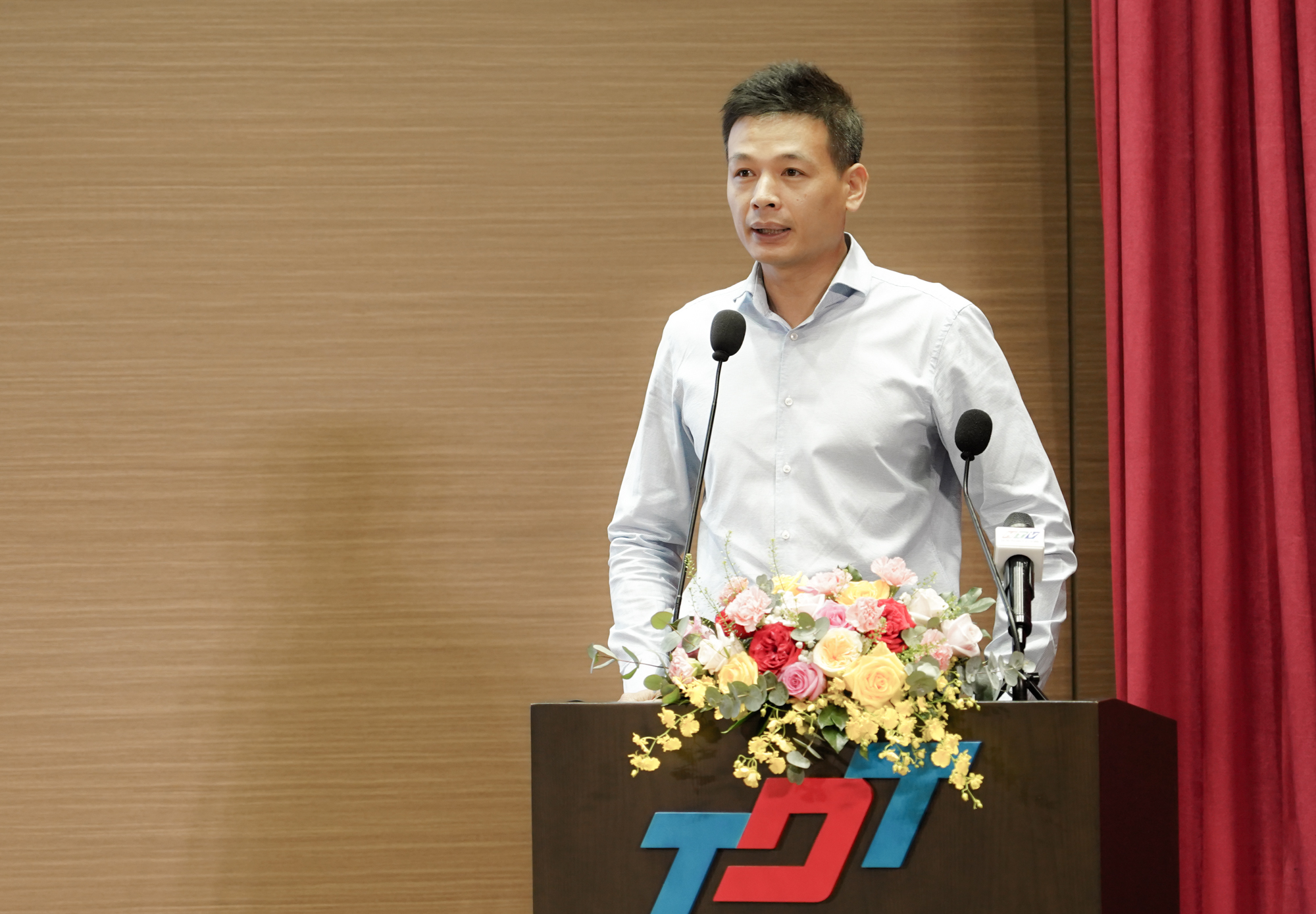
“Several countries have clearly defined UAV planning frameworks since 2016, and more recently UAV has been officially recognized as an industrial sector contributing to multiple areas of the economy,” Mr. Tu noted.
He outlined five major areas where the low-altitude economy can contribute to Ho Chi Minh City’s development:
• Logistics and e-commerce: creating new urban delivery corridors for short-distance and high-value or urgent shipments, optimizing operations through regulated flight corridors and real-time monitoring.
• New industries and high-tech clusters: forming an integrated value chain covering hardware design, batteries and sensors; flight control software, digital mapping and positioning; operations, maintenance, training and insurance services; and low-altitude airspace management systems such as U-Space and UTM.
• Urban infrastructure management and smart cities: generating new data layers through aerial imaging and 3D mapping for monitoring construction, roads, flooding, power grids, telecommunications, public safety and disaster response.
• Healthcare, emergency response and urban welfare: enabling rapid transport of test samples, medicines and medical supplies, and supporting rescue operations during congestion, flooding or isolation.
• Tourism and new services: in the medium term, creating drone-based shows and tourism filming services; in the long term, enabling low-altitude mobility models as technology and regulation mature.
Mr. Tu emphasized that the low-altitude economy is not a single industry but a complex economic model requiring coordinated development across regulatory frameworks, infrastructure investment, digital airspace operating systems, safety mechanisms, financial incentives and integrated system architecture.
To enable the low-altitude economy to take off, close collaboration among city authorities, enterprises and universities is essential in research, experimentation and deployment.
FPT is ready to participate in building digital and operational platforms — including cloud, AI, data, real-time monitoring and cybersecurity — for the low-altitude economy system; to cooperate with the city and partners in implementing pilot projects in regulatory sandboxes; and to contribute to workforce development in engineering, data and AI through FPT Education.
“FPT is committed to accompanying Ho Chi Minh City in enabling the low-altitude economy to take off, contributing to making the city a leading hub and supporting the establishment of low-altitude economic industrial zones with universities at their core — serving as the nucleus in building this new economic model,” Mr. Tu affirmed.