Proposed Establishment of a National UAV Testing Corridor and Nationwide Airspace Zoning
•
27/11/2025
More than 20 experts across 11 strategic technology fields gathered to discuss and propose a series of solutions aimed at advancing Vietnam’s strategic technology sectors during a working session between Deputy Prime Minister Nguyen Chi Dung and the Vietnam Innovation Network (VIN).
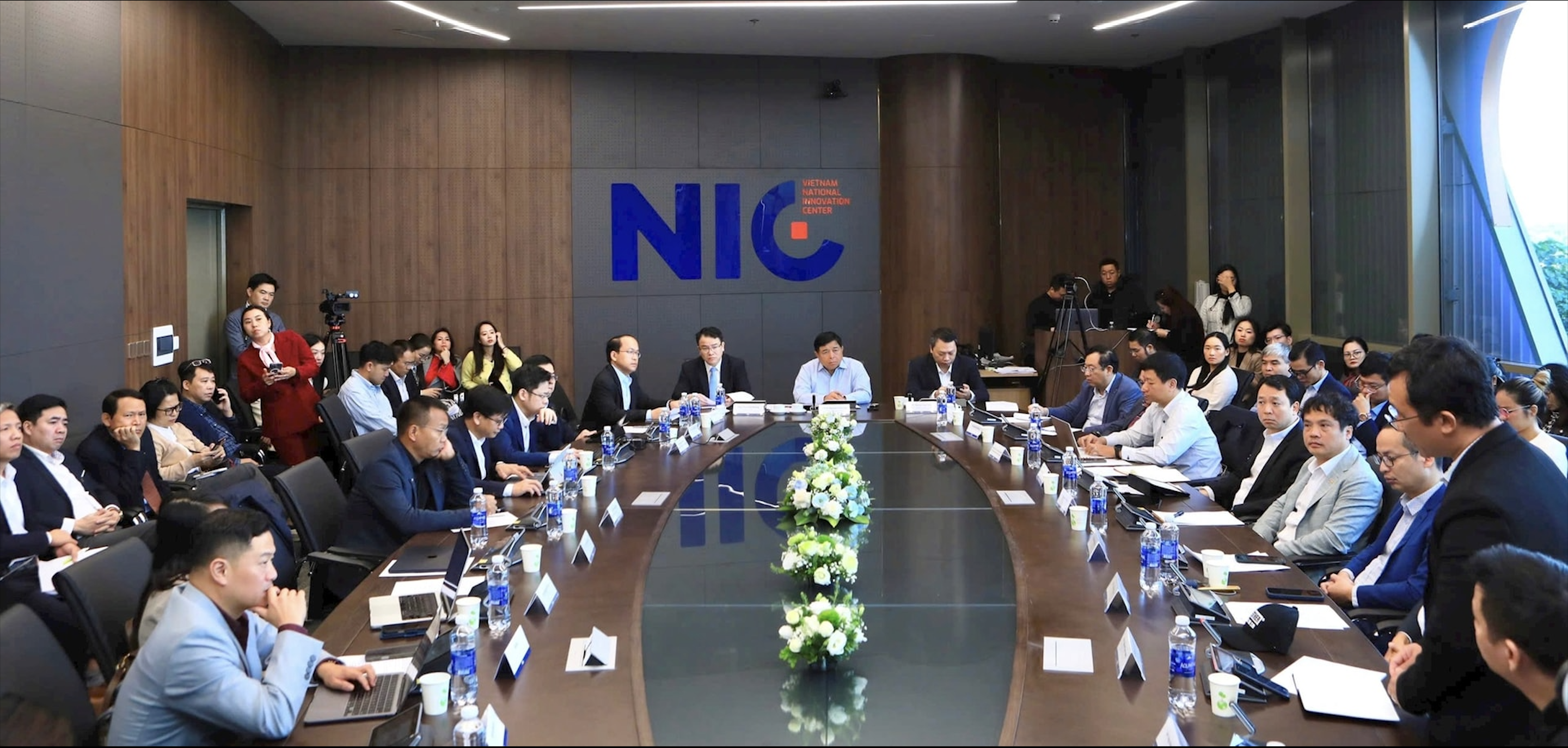
Deputy Prime Minister Nguyen Chi Dung chairs a working session with the Vietnam Innovation Network (VIN). (Photo: Organizing Committee)
On the morning of November 26, at the National Innovation Center (NIC), Deputy Prime Minister Nguyen Chi Dung met with the Vietnam Innovation Network to discuss the development of strategic technology industries.
Speaking with the Deputy Prime Minister, Mr. Nguyen Van Khoa, Chairman of the Vietnam Aviation, Aerospace and Unmanned Aerial Systems Network (AUVS) and CEO of FPT Corporation, presented several key proposals related to aviation, aerospace, and unmanned aerial vehicles (UAVs).
The first major proposal was to integrate UAV data into the National Database. Each UAV, he suggested, must have a unique identification code—similar to vehicle license plates—and be centrally managed with interlinked data shared across the Ministry of National Defense, the Ministry of Public Security, and the Ministry of Construction. This unified system would form a fundamental foundation for aviation safety and transparent governance.
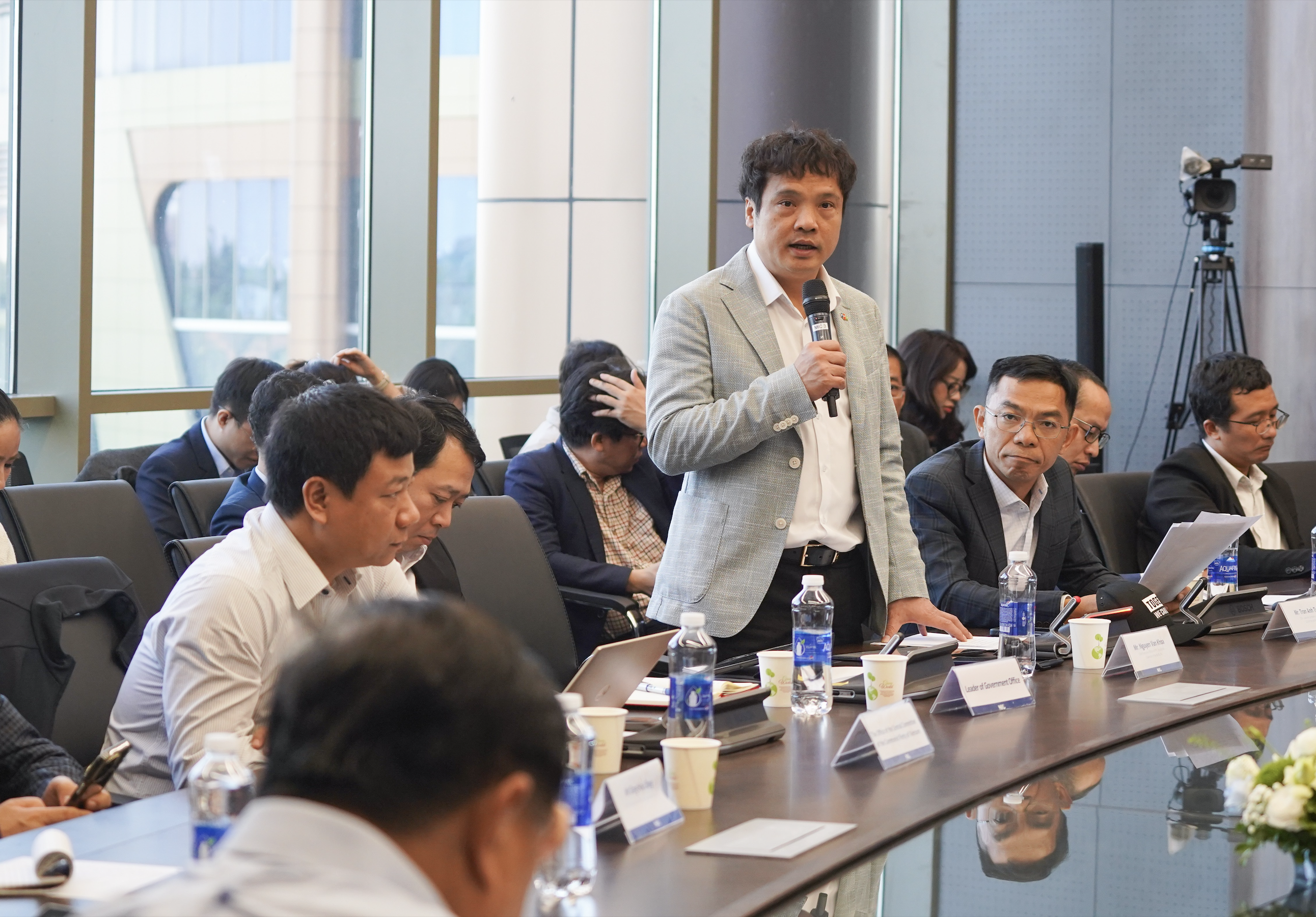
Mr. Nguyen Van Khoa, CEO of FPT Corporation, presents proposals on aviation, aerospace, and unmanned aerial systems. (Photo: Luu Quy)
Mr. Khoa also proposed the establishment of a National UAV Testing Corridor, with initial pilot locations in Hanoi, Quang Ninh, former Binh Dinh province, and Ho Chi Minh City. This corridor would enable testing of multiple UAV applications — including autonomous flight, logistics, agricultural spraying, 3D digital mapping, and emergency rescue.
“Most importantly, a flexible 72-hour licensing mechanism and a testing corridor at an altitude of 50–120 meters will create optimal conditions for enterprises to continuously innovate,” he emphasized.
Additional recommendations included:
• Nationwide UAV airspace zoning
• Establishing a national UAV inspection and certification center
• Developing an ecosystem of Vietnamese UAV enterprises
• Expanding human resource development and strengthening technology diplomacy
A critical pillar, Mr. Khoa stressed, is high-quality human resource development. Programs such as “Engineer in UAV & Robotics” should be implemented at technical universities, while UAV pilot training must be standardized according to FAA (US) and JUIDA (Japan) requirements, with strengthened collaboration between enterprises, institutes, and universities to supply a robust talent pipeline for the industry.
Alongside the seven proposals, the FPT CEO urged the Government to direct five key tasks:
1. Approving the National UAV Development Scheme 2025–2030 (chaired by the Ministry of Science and Technology)
2. Issuing a new decree on UAVs to replace Decree 36/2008 and Decree 79/2011 under the revised Civil Aviation Law from 2026
3. Approving the National UAV Sandbox in 2026
4. Finalizing the nationwide UAV airspace zoning plan
5. Issuing national technical standards (QCVN) for UAVs for 2025–2026
After hearing the experts’ proposals, Deputy Prime Minister Nguyen Chi Dung emphasized that the development of strategic technology industries is a long-term priority and represents the most direct path for Vietnam to catch up, advance alongside, and eventually surpass global competitors—moving toward prosperity, resilience, and national strength.
He requested the Ministry of Science and Technology to incorporate expert feedback, expand the list of strategic technology sectors, prioritize flagship scientific missions, and finalize national standards and intellectual property frameworks for emerging technologies to accelerate commercialization of strategic products.